When selecting a new entryway for your property, understanding the key differences between commercial doors and residential doors is essential for long-term functionality and security. Although both types of doors are designed to protect a space, their construction, materials, and performance expectations vary significantly. These differences affect everything from garage door installation and daily operation to ongoing service and repair needs. By making an informed choice, you can ensure the right balance of durability, curb appeal, and energy efficiency, whether you are outfitting a high-traffic commercial facility or updating a residential entryway.
Commercial doors are built to withstand heavier usage, comply with stricter safety standards, and support specialized features such as security integration and climate control. Residential doors, on the other hand, prioritize aesthetic appeal, quiet operation, and seamless integration with home architecture. Recognizing how these systems differ helps you choose a door that not only meets your property’s requirements but also delivers reliable performance and reduced maintenance for years to come.
Key Structural Differences Between Commercial and Residential Door Systems
The structural integrity of commercial doors is engineered for immense durability and size, accommodating large vehicles and machinery in demanding industrial environments. These systems are fundamentally different from residential doors, which are designed to fit standard home garages and prioritize aesthetic appeal while maintaining reliable, everyday functionality for family use.
Because commercial buildings have unique operational requirements, their doors are built with reinforced construction and heavy-duty components to withstand significant wear and tear. This foundational contrast in build quality and design intent is crucial when determining the right door for your specific needs, as the choice impacts everything from safety to operational efficiency. We will now examine how materials and designs contribute to these important differences.
Learn why professional commercial door service is critical for maintaining safety, efficiency, and uninterrupted operations by reading: Why Professional Commercial Door Service Is a Business Essential, Not an Option.
How Material Choices Impact Durability and Performance
The materials selected for a door system directly correlate with its ability to withstand daily operational stress and environmental factors over many years. For commercial applications where strength is paramount, the material choices reflect a need for maximum resilience and longevity to stand the test of time.
In contrast, residential doors offer a wider spectrum of materials that balance durability with visual appeal, allowing homeowners to customize their home’s exterior. While still durable, these materials are not typically engineered for the high-frequency usage seen in commercial settings, making them the right choice for a different set of priorities.
- Reinforced Steel: This is the primary material for commercial doors, offering superior strength, security, and resistance to impact and harsh weather.
- Aluminum and Glass: Often used for commercial storefronts or service stations like car dealerships, these materials provide visibility and natural light without sacrificing durability.
- Wood and Fiberglass: These are popular for residential doors, providing excellent curb appeal and insulation with various design options.
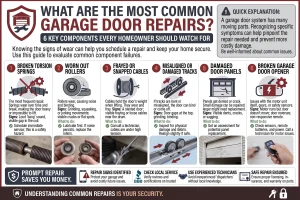
See which essential components keep a garage door performing reliably under daily use and demanding commercial conditions by reading: Key Elements That Make a Garage Door Fully Functional and Reliable.
Maintenance Requirements: Commercial Versus Residential Door Systems
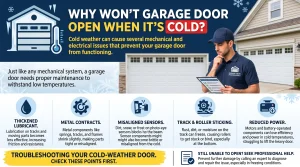
The maintenance needs of commercial and residential door systems differ dramatically due to vast disparities in usage frequency and operational stress. Commercial doors endure constant use in demanding environments, which necessitates a rigorous routine maintenance schedule performed by professionals with years of experience to prevent costly breakdowns and ensure safety.
Residential garage door maintenance, while still important for longevity and safe operation, is typically less intensive and can often be performed on an annual basis. The high stakes of commercial operations make proactive commercial door repair and upkeep a non-negotiable aspect of facility management.
Find out why responding immediately to early signs of commercial door failure helps prevent downtime, liability risks, and expensive emergency repairs by reading: Why Immediate Attention Is Crucial at the First Sign of Commercial Door Failure.
Why Routine Maintenance Is Especially Critical for Commercial Overhead Door Longevity
For any business, a malfunctioning overhead door can lead to significant operational disruptions, security vulnerabilities, and unexpected expenses that halt productivity. Routine maintenance is the most effective strategy for ensuring commercial doors achieve their maximum lifespan and maintain high performance under conditions of constant use.
Regularly scheduled service addresses wear and tear on critical components before they fail, which helps manage long-term costs and avoid the need for emergency commercial door repair. Proactive care not only ensures reliability but also contributes to better energy efficiency by keeping seals and insulation intact, ultimately lowering energy bills over time.
- Preventing Downtime: Regular checks on motors, springs, and tracks prevent unexpected failures that can shut down loading docks or secure entryways.
- Ensuring Safety: Maintenance ensures that safety mechanisms, like auto-reverse features and fire-door triggers, are functioning correctly to protect employees and customers.
- Cost Management: Addressing minor issues early is far more affordable than extensive repairs or a full garage door installation after a major component failure.
- Sustaining Performance: Well-maintained doors operate smoothly and efficiently, supporting a productive and uninterrupted workflow.
Design also plays a crucial role in how commercial doors meet essential safety standards, influencing everything from access control to accident prevention. Doors engineered with reinforced frames, reliable sensors, and precise closing mechanisms offer better protection in high-traffic environments. By choosing the right design from the start, businesses benefit from safer daily operations, improved compliance with regulatory requirements, and a strong foundation that supports long-term performance and maintenance goals.
For more information on how door and gate design impacts accessibility and compliance, get to know the standards outlined by the U.S. Access Board.
Frequency and Depth of Inspections for Each Door Type
The recommended frequency and thoroughness of door inspections are directly tied to the system’s application and level of daily use. Commercial doors, especially those in high-traffic industrial settings, demand comprehensive quarterly inspections to ensure all mechanical and electrical components can withstand their rigorous operational schedule.
In contrast, residential doors typically only require an annual professional inspection to confirm that they are functioning safely and efficiently. This yearly garage door maintenance is usually sufficient to identify potential issues like worn rollers or misaligned sensors before they become significant problems for the homeowner.
- Commercial Quarterly Inspections: Technicians should check spring tension, motor performance, track alignment, and safety compliance features every three to four months.
- Residential Annual Inspections: A yearly checkup should include testing safety sensors, lubricating moving parts, and inspecting springs and cables for signs of wear.
- High-Cycle Environments: Commercial doors used more than 50 times a day may even require monthly inspections to maintain operational integrity.
- Visual Checks: Business owners and homeowners should perform monthly visual inspections and operational tests between professional service appointments.
Legal, Safety, and Regulatory Requirements for Commercial Doors
Unlike residential doors, commercial doors are subject to stringent legal, safety, and regulatory requirements designed to protect employees and the public. These compliance standards govern everything from fire resistance to accessibility, ensuring that doors on a commercial property function safely and reliably in all situations, including emergencies.
Failure to adhere to these mandates can result in significant fines, legal liability, and a hazardous environment for anyone interacting with the commercial space. Understanding these unique obligations is, therefore, a critical responsibility for any business owner. The following sections will provide more detail on these specific compliance standards and safety protocols.
Compliance Standards Unique to Commercial Door Systems
Commercial door systems must meet specific, legally mandated compliance standards that are not required in residential settings. These regulations are enforced to ensure a baseline of safety and functionality across all commercial properties, particularly in public spaces where the risk of accidents is higher.
For example, many commercial buildings are required to have fire doors that meet strict criteria for fire resistance and automatic closing capabilities. Adhering to these codes is not optional and often requires professional certification and regular inspections to maintain compliance, making commercial door repair and maintenance a critical regulatory concern.
For more information on how ADA design standards influence door installation and ongoing maintenance, get familiar with the guidelines provided by the United States Department of Justice.
Safety Protocols and Best Practices Applied in Commercial Settings
In addition to legal standards, established safety protocols and best practices are essential for operating commercial doors safely, especially in high-traffic public spaces. These measures extend beyond the initial installation, including ongoing training and regular functional tests to ensure all safety features function as intended.
Implementing a consistent safety plan, which includes professional commercial door repair and maintenance, helps mitigate risks associated with heavy and frequently used door systems. This includes proper care of garage door openers and operators, which must function correctly to support safe and controlled movement throughout the facility. For instance, ensuring that fire doors are never obstructed and that safety sensors are clean and aligned are critical but straightforward practices that protect lives and property.
- Regular Safety Inspections: Performing and documenting routine checks of all safety features, including auto-reverse mechanisms and emergency releases.
- Employee Training: Instructing staff on the proper and safe operation of all commercial doors, including manual override procedures.
- Clearance and Signage: Maintaining clear pathways around all doors and posting visible warning signs where appropriate.
- Professional Servicing: Partnering with a qualified garage door company in Sussex for annual inspections and testing of specialized systems like fire doors.
Dependable Commercial Door Service
The distinctions between commercial and residential door systems are significant, impacting choices in hardware, materials, and maintenance practices. With a thorough understanding of these differences, one can make informed decisions tailored to specific needs and environments. Regular maintenance of commercial doors is critical to ensuring safety and compliance with legal standards. Furthermore, recognizing the unique features and requirements of both types of systems can lead to better investments over time. For those seeking to enhance their knowledge further, the exploration of each section will uncover additional insights into maintaining and optimizing door systems for any setting.
Anytime Garage Doors provides comprehensive garage door solutions designed to keep residential and commercial systems operating smoothly. Our experienced technicians focus on quality workmanship and detailed execution for every repair, upgrade, or installation. From straightforward service calls to more complex system needs, we are committed to delivering results that meet and exceed expectations. Each project is completed with care, accuracy, and proven service methods.
Contact us today or give us a call to get dependable garage door service from a trusted team.
Frequently Asked Questions
What is the primary difference between commercial and residential door systems?
Commercial door systems are built for higher traffic, heavier loads, and more demanding environments. Residential doors focus more on quiet operation, aesthetics, and integration with home architecture. These differing priorities influence the materials used, the mechanisms inside the door, and the level of maintenance required over time.
Why do commercial doors require more frequent maintenance than residential doors?
Commercial doors operate far more often throughout the day, which leads to faster wear on components such as rollers, hinges, springs, and operators. This increased usage means issues can develop sooner and require closer monitoring. We address these demands through regular inspections to keep the system functioning safely and efficiently.
How does the design of commercial doors impact repair needs?
Commercial doors often include reinforced frames, specialized hardware, and heavier-duty construction to meet safety and performance standards. These features make them more resilient but also more complex to repair. Understanding this design helps ensure that service is done correctly and in compliance with commercial requirements.
Why are the openers and operators used in commercial settings different from residential ones?
Commercial openers and operators are engineered to handle higher cycles, stronger lifting demands, and integration with security or access control systems. Residential openers are designed for lighter, quieter operation suited to daily home use. Because of these differences, commercial systems require specialized knowledge for accurate repair and adjustment.
How do safety standards differ between commercial and residential doors?
Commercial doors must comply with stricter safety regulations due to their higher traffic and greater potential for workplace injuries. These standards often include enhanced sensor systems, controlled closing speeds, and emergency release mechanisms. Meeting these requirements helps protect employees, customers, and valuable business assets.
Why is damage progression different in commercial doors compared to residential doors?
With frequent operation and heavier usage, commercial doors experience faster stress accumulation across key components. Small issues can escalate quickly if not addressed early. Residential doors, by contrast, operate less frequently and typically show wear over a longer period.
How does maintenance scheduling differ between commercial and residential systems?
Commercial facilities often follow a planned maintenance schedule to ensure compliance and prevent downtime. These visits allow professionals to monitor mechanical performance and make early adjustments. Residential systems generally need fewer scheduled visits unless the door is aging or showing signs of wear.
How do repair approaches differ between commercial and residential doors?
Commercial repairs often involve larger, heavier components and must consider safety regulations and operational workflow. Service may need to be completed quickly to minimize business interruption. Residential repairs typically focus on restoring smooth, quiet operation and maintaining curb appeal.
Why is professional service especially important for commercial door systems?
The complexity of commercial hardware, operators, and safety features requires expertise to diagnose and fix issues properly. We understand the unique regulations and demands of commercial environments, which allows us to complete repairs that support safe and uninterrupted operations. This level of precision is critical to maintaining long-term performance.
How does daily usage affect commercial systems differently from residential ones?
Commercial doors may cycle dozens or even hundreds of times per day, depending on the facility. This heavy workload accelerates wear and increases the need for proactive maintenance. Residential doors, used only a handful of times each day, experience much slower wear.