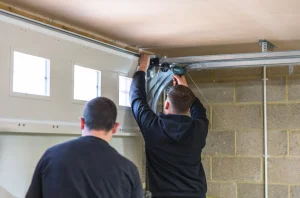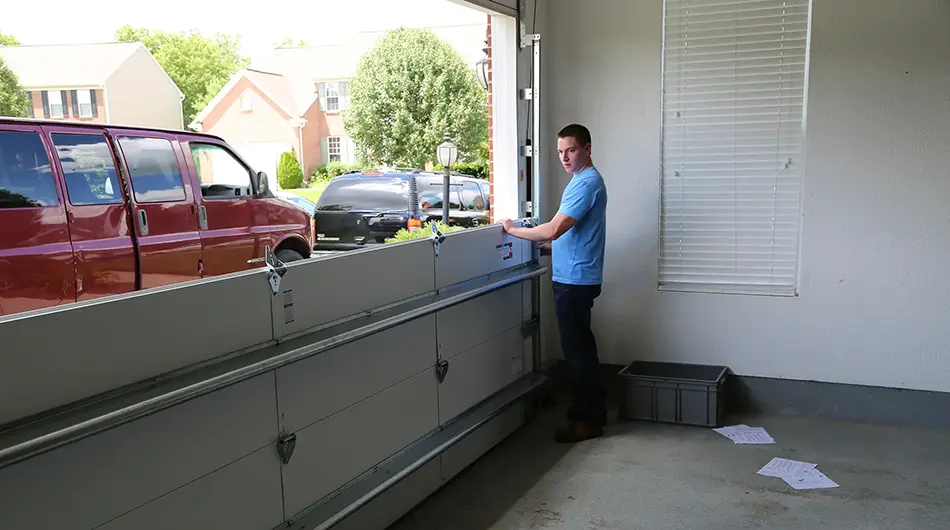
A yellow sensor light often signals that the door’s safety beam is not being read consistently, even if the system worked fine earlier in the day. In many cases, the issue starts when the garage door sensor beam is not lining up across the opening the way it should.
In Sussex, WI, small shifts in brackets, track movement, or vibration can affect how the safety system reads the beam. This guide explains how alignment causes these warnings and when the symptoms point to a different garage door repair need.
Can Misalignment Trigger a Yellow Light on the Garage Door Sensor?
A yellow sensor light during closing often indicates the safety beam is not being confirmed consistently, and misalignment is one of the most common reasons, as even a small shift can interrupt the infrared beam and trigger the opener to stop the closing cycle to prevent potential issues.
Common ways misalignment leads to an unstable beam include:
- The brackets shift, so the sensors no longer face each other on the door side.
- The receiving sensor loses the beam during vibration, causing blinking or flashing sensor lights.
- Changes in mounting height cause the garage door sensor to lose steady functionality during closing.
- Sunlight or reflections make alignment seem correct while the beam still drops.
- Wiring tension pulls the sensor housing out of its proper position, triggering repeated troubleshooting.
For a complete explanation of what a yellow sensor light means and what professionals check first, read our blog on Yellow Sensor Light on a Garage Door: What It Means and What to Check, which breaks down the most common reasons these yellow lights appear and how the garage door system confirms safe closing.
Alignment Causes That Commonly Lead to a Yellow Indicator
Shifted Sensor Brackets From Vibration and Daily Door Use
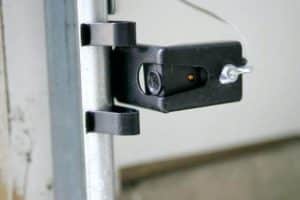
Daily movement and vibration can shift mounting brackets, causing the garage door sensor to lose a stable infrared beam across the opening.
This issue is commonly linked to:
- Track-based bracket drift over time
- Loose mounting bolts from vibration
- Minor impact near the sensor area
- Uneven door travel stresses the bracket
- Seasonal movement affecting hardware
Bracket movement changes beam aim gradually, so professionals focus on mounting stability and vibration sources before treating the sensors as failed.
Sensor Heads Rotated Slightly Off Axis
A sensor can remain mounted while rotating slightly, so the beam no longer hits the receiving side consistently during closing.
Alignment problems often appear when:
- Sensor face twists off-center
- Housing rotates at the mounting joint
- Vibration loosens the sensor angle
- Beam aim changes during movement
- Rotation worsens over repeated cycles
Even minor rotation can disrupt beam consistency and affect how the opener processes safety input, which is why sensor face orientation is verified early during a garage door opener repair to restore stable and reliable closing.
Mounting Height Mismatch Between Sender and Receiver
When the two sensors sit at different heights, the beam path can miss the receiver even though both units appear straight.
Height-related causes often include:
- Uneven sensor height on each side
- Track shift altering mounting level
- Floor slope affecting bracket height
- Replacement sensor installed higher or lower
- Receiver barely catching the beam
Height differences across the opening often create unstable detection, making level alignment a priority before deeper electrical checks.
Track or Hardware Movement Pulling the Sensor Out of Line
Lower track movement can pull the sensor mount out of position, destabilizing the safety beam reading.
This condition is usually associated with:
- Track bracket shift near the base
- Fastener drift at the photo eye mount
- Track impact marks or stress
- Door bind is increasing vibration
- Hardware movement affecting alignment
Track stability directly affects sensor positioning, so the mounting reference point is inspected to prevent recurring alignment problems.
Loose Fasteners Creating Micro-Movement Under Door Vibration
Even slight fastener looseness can cause micro-movement that interrupts the beam only during motion.
Micro-movement typically shows up as:
- Wing nuts are loosening over time
- Sensor wobbles during closing
- Bracket flex under vibration
- Beam loss only in the down cycle
- Inconsistent sensor readings
Micro-movement is easiest to miss during a visual check, which is why real-time stability testing during door travel is often part of a thorough garage door maintenance service.
Wire Tension or Cable Routing That Tugs the Sensor Housing
Wiring can pull the sensor body out of alignment when routing places constant tension on the sensor housing.
This problem often develops when:
- Wiring is pulled too tight
- Cables snag during door movement
- Wire strain occurs near the track base
- Slack shifts and tugs repeatedly
- Terminal connections pull the sensor
Improper wire routing can recreate alignment drift, so routing and slack are evaluated to support long-term sensor stability.
Floor Slope or Settlement Near the Sensor Mounting Area
Small changes at the floor level can alter sensor height and beam angle enough to disrupt detection.
Floor-related alignment issues may involve:
- Sloped slab near the opening
- Settlement under one track base
- Uneven mounting surface contact
- Gradual bracket height drift
- Receiver alignment shifting over time
Floor-level changes alter sensor geometry, making it critical to confirm height and angle before recommending part replacement.
Sunlight and Reflective Surfaces That Make Alignment Seem Unstable
Environmental light can interfere with the receiver and make alignment appear unreliable, even when it is close.
This type of interference is often caused by:
- Direct sunlight on the receiving sensor
- Reflective glare off vehicles or floors
- Seasonal sun-angle changes
- Bright lighting near the opening
- Time-of-day beam disruption
Chamberlain Group explains how direct sun and reflective glare can interfere with safety sensors, especially when light conditions change throughout the day.
When the Yellow Light Is Not Caused by Alignment
Intermittent Wiring or Loose Connections at the Sensor
A yellow indicator can persist even when alignment is correct if wiring connections are unstable and the garage door sensor signal drops in and out during operation.
Patterns that often point to wiring instability include:
- Sensor lights flicker during door movement
- Blinking appears after vibration near the track
- One sensor goes dark at random times
- The opener starts closing, then stops quickly
- Light behavior changes when the wire is moved
Wiring-related signal drops are confirmed by checking connection stability and observing consistent sensor response during normal operation, which is often handled through garage door openers and operators’ diagnostics.
Power or Logic Issues at the Opener
The garage door system can display a yellow warning pattern when the opener has power delivery problems or when the internal logic misreads stable sensor input.
Signs that often suggest opener-side technical issues include:
- Closing starts, then stops without obstruction
- The opener clicks but does not complete a cycle
- Sensor lights appear normal, but closing fails
- Behavior changes after a power event
- The system responds inconsistently to commands
Opener-side problems are identified by verifying how the unit processes safety inputs during closing and whether internal signals remain stable under load.
Sensor Component Degradation or Failure
A garage door sensor may remain aligned but still behave unpredictably when internal components weaken, preventing it from producing or reading a strong, consistent infrared beam.
Clues that can point toward failing sensors include:
- The light is dimmer than it used to be
- The receiver struggles to hold a steady green light
- Problems return soon after a check
- The door refuses to close in clear conditions
- The issue worsens over weeks or months
According to LiftMaster, a safety sensor LED that is off or flickering can indicate a sensor or signal problem that may persist even when alignment appears correct.
What the System Is Detecting When the Garage Door Sensor Light Turns Yellow
A garage door sensor pair works like a safety gate: one sensor sends an invisible beam across the opening, and the other confirms it has received it. Any break or unreliable signal is treated as a safety risk, and the door may refuse to close.
Here’s what the system is reacting to:
- The safety beam is an infrared beam meant to detect an obstruction in the opening.
- If the beam is not confirmed, the opener may stop closing to reduce the risk of damage or an unsafe close.
- A dirty or hazy sensor lens can weaken the signal and mimic alignment trouble.
- Many setups show an amber or yellow sensor light on the sending side and a steady green light on the receiving side when the beam is stable.
- Yellow indicator behavior matters most when it shows instability or repeats with closing failure.
If you want a clearer breakdown to help homeowners narrow the cause before requesting service, read our guide on How Do You Test a Garage Door Sensor With a Yellow Light, which explains the key checks and what the results usually point to.
What Professionals Check When a Yellow Sensor Light Affects Closing
Professional service confirms reliable closing by checking the garage door sensor pair, beam conditions, and system response together, since a yellow indicator can be tied to alignment drift, signal instability, or door movement that keeps disrupting the safety input.
What professionals typically check includes:
- Sensor mounting stability so alignment holds during travel
- Beam path clearance near the floor, including small obstruction risks
- Sensor lenses’ condition, including haze, debris, or moisture film
- Wiring stability and terminal connections to rule out signal dropouts
- Opener behavior during a close cycle to confirm safety input processing
- Door travel vibration that can recreate misalignment and repeat stops
To understand local causes and how yellow indicator patterns typically appear in Sussex homes, read our blog on Why Is My Garage Door Sensor Light Yellow in Sussex, WI, which explains the most common reasons the light changes and how professionals confirm the true cause before restoring safe and reliable closing.
Restore Reliable Sensor Alignment and Safer Closing in Sussex, WI
A yellow indicator can be normal in some setups, but it becomes a problem when your garage door sensor system cannot hold a stable safety beam, and the door will not close consistently. When alignment drift, glare, debris, or wiring instability is present, the door may refuse to close, reverse unexpectedly, or keep showing a garage door sensor yellow light during closing attempts.
Anytime Garage Doors helps Sussex, WI homeowners restore safe, reliable closing with sensor evaluation, alignment verification, and complete system checks that address the true cause, not only the symptom. If you want clear answers and a stable close cycle, contact us or give us a call today to schedule service and get your door working safely again.
Frequently Asked Questions
Can the garage door still open if the sensors are misaligned?
Yes. Many systems will still open because the safety sensor is mainly enforced during the down cycle. Even so, misalignment can prevent safe closing and lead to repeat stops or reversals that need professional evaluation.
Should both sensors show the same light color at the same time?
Not always. Many setups show an amber sender and a green receiver when the beam is being confirmed. If the receiver is dim, flickering, or off, it usually means the beam is not stable enough for reliable closing.
Can a yellow sensor light cause the door to reverse while closing?
Yes. If the opener reads the beam as interrupted or unstable, it can stop and reverse as a safety response. This often points to alignment drift, interference, or signal problems that show up during motion.
Can recent track repairs change sensor alignment indirectly?
Yes. Track adjustments can shift the mounting reference point slightly and alter beam aim. If the bracket is tied to track hardware, alignment verification is often needed after track-related service.
Can extreme cold or heat affect sensor stability even if alignment is correct?
Yes. Temperature swings can alter how materials expand and contract, potentially slightly shifting brackets or increasing vibration near the sensor. In Sussex, WI, seasonal changes can make borderline sensor issues more common.
Can a blinking yellow light mean something different than a solid yellow light?
Yes. A solid amber or orange light on one side can be normal depending on the model, while blinking behavior usually signals instability in the safety signal. A repeated yellow light on garage door sensor behavior during closing attempts is treated as a sign that the system is not confirming a steady beam.
Can sensor alignment issues affect only daytime operation or only nighttime operation?
Yes. Sun angle and reflective glare can disrupt the receiver more at certain times of day. When timing patterns are consistent, environmental light conditions are checked alongside beam stability.
Can a new opener installation change sensor behavior without sensor damage?
Yes. Wiring and terminal configuration changes can affect how the system reads the safety input, even when the sensors are intact. A professional garage door technician checks for wiring issues and confirms that the safety input remains stable throughout a full close cycle.
How long does a professional sensor evaluation usually take?
It depends on whether the concern is limited to the sensors or tied to door travel issues. Many calls start with beam stability and mounting checks, then expand into opener diagnostics if the symptom pattern points that way.
Is it common for sensor issues to return after storms or power events?
Yes. Power events can affect electronics, and storms can shift debris or moisture near the floor. If you keep searching for a garage door sensor near me after repeated problems, it usually means the root cause still needs a full system check to prevent repeat interruptions.