A yellow light on a garage door sensor can stay on even when the safety beam is not being detected correctly. Testing helps determine whether the sensors are aligned, the beam path is clear, or the opener is stopping the door because it reads an unstable signal.
This guide explains how professionals test a garage door sensor with a yellow light in Sussex, WI, and what the test results usually indicate. It also explains when the findings point to a garage door repair instead of a simple sensor adjustment.
Why Does a Yellow Sensor Light Still Require Testing?
A yellow sensor light can appear normal at first glance, but it does not confirm that the safety beam is being detected reliably, which is why testing is necessary to verify beam consistency, receiver recognition, and opener response before assuming the system can close safely.
Common reasons a yellow sensor light still needs to be tested include:
- The receiving sensor may not be consistently reading the infrared beam.
- Slight alignment shifts can reduce beam stability without turning the light off.
- Wiring connections may lose signal intermittently during door movement.
- Environmental interference can disrupt detection without changing the indicator color.
- The opener may block closing when sensor input appears unstable.
For a complete explanation of how a yellow sensor light fits into overall safety signaling and what should be checked first, read our blog on Yellow Sensor Light on a Garage Door: What It Means and What to Check, which explains how professionals interpret indicator behavior and confirm safe system operation.
Testing Methods for a Yellow Sensor Light Issue
Confirm the Indicator Light Pattern Before Any Testing
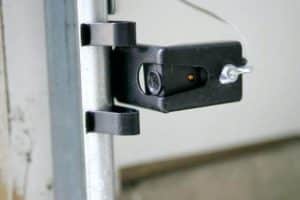
Start by checking the sensor LEDs, as the light pattern can tell you whether the system is receiving a steady safety signal or an unstable one, which helps you understand what the door is reacting to before moving on to other checks.
What to note before you do anything else:
- Check whether the yellow sensor light stays steady or starts flashing.
- Notice whether the receiving sensor shows a solid light or blinking behavior.
- Watch for any red light indicator if your sensor style uses one.
- Compare whether both garage door sensor lights remain stable during a close attempt.
- Confirm whether the same light pattern repeats each time or changes between attempts.
Many LiftMaster and Chamberlain systems use a yellow or amber sender light and a green receiver light, and this Chamberlain Group guide explains what it means when one LED is off or flickering during beam detection and closing.
Perform a Controlled Close Attempt and Observe Reversal Behavior
Run a controlled close attempt to confirm whether the door is reversing because the safety beam is being interrupted or because the opener is sensing another problem during travel.
What to watch for during the close attempt:
- Listen for hesitation, clicking, or a stop-start pattern as the garage door begins moving.
- Track whether the door stops at the same spot each time, even when the beam path looks clear.
- Measure whether the door reverses fully or only travels a long way back up before stopping.
- Compare how the opener behaves when you use the wall control versus the remote.
- Note whether the garage door sensor lights change at a specific point during travel.
The U.S. Consumer Product Safety Commission explains why photoelectric safety sensors are required for many automatic residential garage door openers and how they help prevent entrapment during closing.
Interrupt the Safety Beam to Verify Receiver Response
Block the safety beam during a close attempt to confirm the system reacts the way it should, because a reliable response helps show whether the receiver is reading the beam steadily or losing detection during closing.
What to confirm during a beam-interruption check:
- Block the infrared beam and verify the door stops and reverses right away.
- Observe whether the receiving sensor light stays stable before and after the interruption.
- Time is how quickly reversal happens, since delays can point to an unstable signal.
- Repeat the interruption multiple times to see if the result remains consistent.
- Record whether the opener behaves the same on each attempt or changes from run to run.
If the door does not reverse immediately every time the beam is blocked or the receiver light changes during the test, the sensors are not communicating reliably, and the door should not be relied on to close consistently.
Check for Intermittent Wiring Behavior During Door Movement
A yellow light can stay on even when the sensor signal drops in and out, so watching the lights while the door moves can help you spot wiring problems caused by vibration, track movement, or a pinched cable.
What to check while the door is moving:
- Look for wiring issues near staples, sharp bends, or tight corners along the wall.
- Inspect the cable jacket for rubbing, cracking, or worn spots that suggest stress over time.
- Follow the wire route on the side of the door and note any areas where moving hardware could tug the cable.
- Watch the sensor lights during travel to see if they flicker or change at the same point each time.
- Notice whether the opener behaves differently right when the lights change, such as stopping or reversing.
If the sensor lights only cut out while the door is moving and stay normal when the door is still, the issue is usually related to wiring routing or connection stability rather than the sensor units themselves.
Confirm Sensor Power and Opener Input Consistency
A yellow garage door sensor can still show power even when the opener is not receiving a steady signal, so a simple power-and-response check helps you confirm whether the issue is at the sensors, the wiring path, or the opener’s sensor input.
What to verify before you call for service:
- Confirm the sensor lights are on at both sides of the door opening.
- Test whether the door behaves differently when you use the wall control versus a remote.
- Observe whether the lights stay steady during a close attempt or change as the opener starts.
- Check that the sensor wires appear seated firmly at the opener terminals and are not loose.
- Note whether the opener shows unusual behavior that suggests technical issues, such as refusal to close or repeated reversals.
Cornell Law School’s Legal Information Institute summarizes the federal safety standard that covers photoelectric sensor requirements for residential garage door openers, which helps explain why a stable sensor input matters for closing behavior.
Rule Out Environmental Interference Affecting Beam Stability
Even when the sensors and wiring are intact, the safety beam can appear unstable due to sunlight, reflections, moisture, or debris near the opening, and Sussex, WI, conditions like low-angle sun and reflective snow can make these problems more common.
What to check for interference near the sensor path:
- Notice whether the sun glare hits the receiving sensor at a certain time of day.
- Identify reflective surfaces that could bounce light across the opening and confuse detection.
- Check for moisture haze on the sensor face that can scatter the beam signal.
- Clear small, easy-to-miss obstructions, including cobwebs near the brackets.
- Track whether malfunctions only happen during specific time windows, such as mornings or late afternoons.
If the sensor problem occurs only at certain times of day or under specific weather conditions, interference is often the cause of an inconsistent beam signal.
Garage Door Sensor Testing Results and What They Usually Mean
Testing is helpful because it connects the observed light behavior to the most likely cause, so you can describe the issue clearly and avoid assumptions.
Common result patterns and what they usually indicate:
- Yellow sender steady, receiver flickers: The beam is not being detected consistently.
- Both lights steady, door reverses: Travel resistance or opener logic may be involved.
- Lights change only during movement: Cable routing or intermittent wiring is likely.
- Reversal is delayed or inconsistent: Sensor input at the opener may be unstable.
- No change when the beam is blocked: The sensor pair may be miswired or mismatched.
For a Sussex-specific breakdown of why these patterns occur and what they usually point to locally, read our blog on Why Is My Garage Door Sensor Light Yellow in Sussex, WI, as it explains the most common causes and the symptom clues that help narrow the true source of the problem.
Garage Door Sensor Yellow Light Problems That Commonly Get Misread
When homeowners search for a garage door sensor near me, it is often because the symptom seems simple, but the cause is not, since a yellow indicator can appear normal even when the safety signal is unstable and the door will not close reliably.
Common misreads that lead to wrong assumptions include:
- Assuming a steady yellow LED proves the system is aligned and working correctly.
- Believing every reversal means the sensors are bad.
- Missing wiring faults because the issue happens on and off.
- Ignoring sunlight changes that affect beam stability during certain hours.
- Confusing sensor symptoms with opener force or travel resistance problems.
If alignment is the suspected root cause, read our blog on Can Garage Door Sensor Alignment Cause a Yellow Light, which explains how small bracket shifts and beam angle changes can trigger unstable detection even when a yellow light stays on.
When Testing Results Point to a Safety Risk
A safety risk is not about the light color itself, as it arises from inconsistent reversal protection when the sensor signal is unstable, and the door cannot confirm a clear path during closing.
Signs testing indicates elevated risk include:
- Needing constant pressure on the wall control to make the door close.
- Seeing the receiver light fail to stay stable even when the opening is clear.
- Getting reversals that do not follow a repeatable pattern.
- Failing the beam-block test because reversal does not happen the same way each time.
- Experiencing back-to-back failures even after you clear the opening and try again.
When these symptoms appear, the door should not be relied on to close consistently, and booking an emergency garage door repair helps restore a stable safety response and protect the opening until the issue is corrected.
What a Professional Inspection Typically Confirms After Testing
A service inspection goes beyond checking whether the lights are on, because it verifies the full safety chain from the sensors to the opener and confirms the door closes and reverses the same way every time.
What a professional garage door technician typically confirms:
- Placement: Sensor mounting height and whether each unit is in the right place.
- Stability: Bracket condition and whether vibration or impact shifted alignment.
- Clarity: Sensor lens condition and whether beam visibility is reduced by buildup.
- Routing: Wiring path, pinch points, and secure connections at the opener.
- Movement: Door travel resistance that can trigger reversals even with steady lights.
If lens buildup is part of the potential issue, the sensor lenses are typically cleaned with a soft or dry cloth to ensure the beam reads cleanly, since rough materials can scratch the surface and make detection less reliable over time.
Average Cost Factors That Can Affect Sensor Service
Average cost may depend on how quickly the cause can be confirmed and whether the correction remains sensor-related or extends to other parts of the door and opener system.
Average cost may depend on:
- Scope: Whether the issue is sensor-only or tied to door travel resistance.
- Wiring: Whether wiring damage requires rerouting or replacement.
- Hardware: Whether brackets are bent or mounting parts are loose.
- Compatibility: Whether the opener and control board correctly read the sensor input.
- Symptoms: Whether multiple problems show up beyond sensor behavior.
If testing shows the sensors are not the only problem, scheduling a garage door opener repair service can be the right fit when the opener is not consistently reading sensor input or is blocking closure even when the beam path is clear.
Sensor Testing and Next Steps in Sussex, WI
When the indicators are confusing, testing turns uncertainty into clear answers. We focus on stable beam detection, stable receiver response, and stable opener interpretation to ensure the opening is protected as designed.
Anytime Garage Doors serves Sussex, WI with thorough sensor testing and clear findings that prioritize safety and reliable operation. If you are dealing with a sender that stays yellow, a receiver that will not stay solid, or inconsistent reversing, contact us or give us a call today for scheduling help and next-step guidance.
Frequently Asked Questions
Can a steady yellow sender light still mean a problem exists?
Yes. A steady yellow indicator can still show up when the receiver is not reading the beam consistently, when sunlight disrupts detection, or when the wiring drops the signal during movement. That is why we focus on close behavior and reversal response, not only the LED.
What does it mean if the receiver is not solid even when the opening is clear?
It usually means the beam is not being detected reliably. Alignment drift, lens haze, interference, or connection instability can all cause this, and the quickest way to confirm it is to watch whether the light changes during a close attempt and beam-block test.
Do sensors always show yellow and green, or can colors vary?
Colors can vary by brand and sensor generation. Many systems use amber or yellow on the sender and green on the receiver, but some styles use different indicators, so the most important factor is whether the door closes normally and reverses instantly when the beam is blocked.
Can sunlight cause sensor trouble even if the sensors are mounted correctly?
Yes. Low-angle sun, bright reflections, and glare can disrupt the beam even when brackets are solid, and the sensors look aligned. If the issue happens at the same time of day, sunlight interference becomes a strong possibility.
Why does the door close fine at night but fail during the day?
This often points to daylight-related interference, especially sun glare or reflections off nearby surfaces. If the problem repeats during certain daytime hours, the environment is likely affecting detection more than the sensor parts themselves.
Can wiring faults cause sensor problems that come and go?
Yes. Intermittent wiring can cause flickering lights, random reversals, or a door that closes normally one time and fails the next. This is common when wires are pinched, stressed, or loose at the opener terminals.
Is it possible the opener is the problem, not the sensors?
Yes. If the sensors appear normal but the opener still refuses to close, the opener may be misreading the sensor input or reacting to another control condition. This is why comparing wall-button behavior and remote behavior can help narrow the cause.
Should we keep using the door if it keeps reversing?
If reversals are unpredictable or the door will not close reliably, limit use because the system is not confirming a stable safety signal. A repeating reversal pattern usually indicates that the sensors, wiring, or the opener input needs attention before normal closing can be trusted.
Does sensor trouble affect all door styles the same way?
The safety beam works the same across door styles, but heavier doors or doors with higher travel resistance can trigger additional reversals that appear as sensor trouble. That is why the types of garage doors and the smoothness of movement matter when interpreting results.
What if the sender is yellow but the receiver is also yellow?
Some sensor sets use similar colors on both sides, but this can also indicate mismatched sensors or incorrect communication. If the yellow light on the garage door sensor indicators does not stay stable during a close attempt, the system should be tested for compatibility and consistent beam detection.