If you have ever walked into your garage on a freezing Wisconsin morning, hit the remote button, and nothing happened, you already know how frustrating a dead garage door opener battery can be. It is one of those small problems that stops your entire day in its tracks.
Here is the good news: a dead or dying battery is one of the most common garage door issues reported by homeowners in Sussex, WI, and across Waukesha County. It is also one of the easiest to fix when you know what to look for. However, when the problem goes beyond the battery, timely garage door opener repair can prevent bigger and more costly issues down the road.
This complete guide breaks everything down step by step. Whether the problem is in the remote, the keypad, or the backup battery unit inside the opener itself, this resource covers all three. Plus, it includes expert tips on how to avoid the problem in the first place and when it makes more sense to call a professional.
What You Will Learn:
- Which battery does your garage door system actually need
- The warning signs that a battery is about to fail
- How to replace batteries in remotes, keypads, and backup units
- Common mistakes to avoid
- How to make batteries last longer
- When to stop DIYing and call a local Sussex garage door expert
Know Which Battery You Actually Need
Most people assume there is only one battery involved in a garage door opener system. That is usually the first mistake.
There are actually three different components that may use a battery, and each one uses a different type.
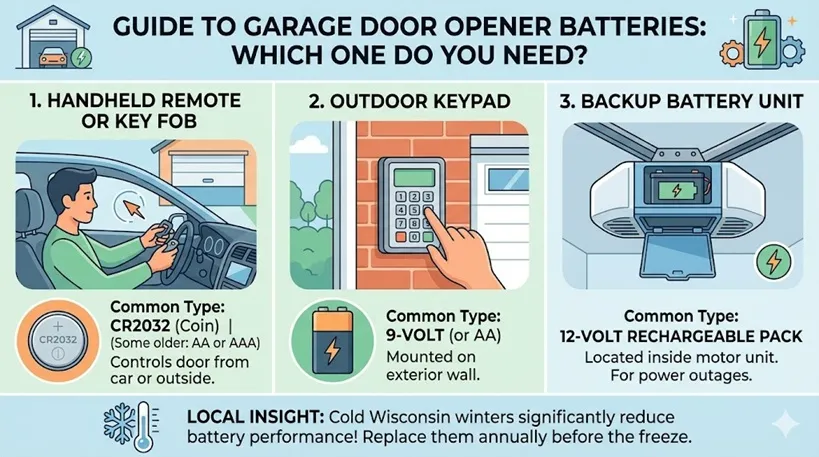
- Garage Door Remote or Key Fob: This is the handheld device you use from inside your car or at the entrance of your garage. Most remotes use a CR2032 coin battery, though some older or larger remotes use AA or AAA batteries. Always check the back of the remote or inside the battery compartment to confirm.
- Outdoor Keypad: The wall-mounted keypad outside your garage door typically runs on a 9-volt battery. Some newer models use AA batteries. These keypads take a beating from the elements, especially in Sussex, WI, where winter temperatures regularly drop below freezing.
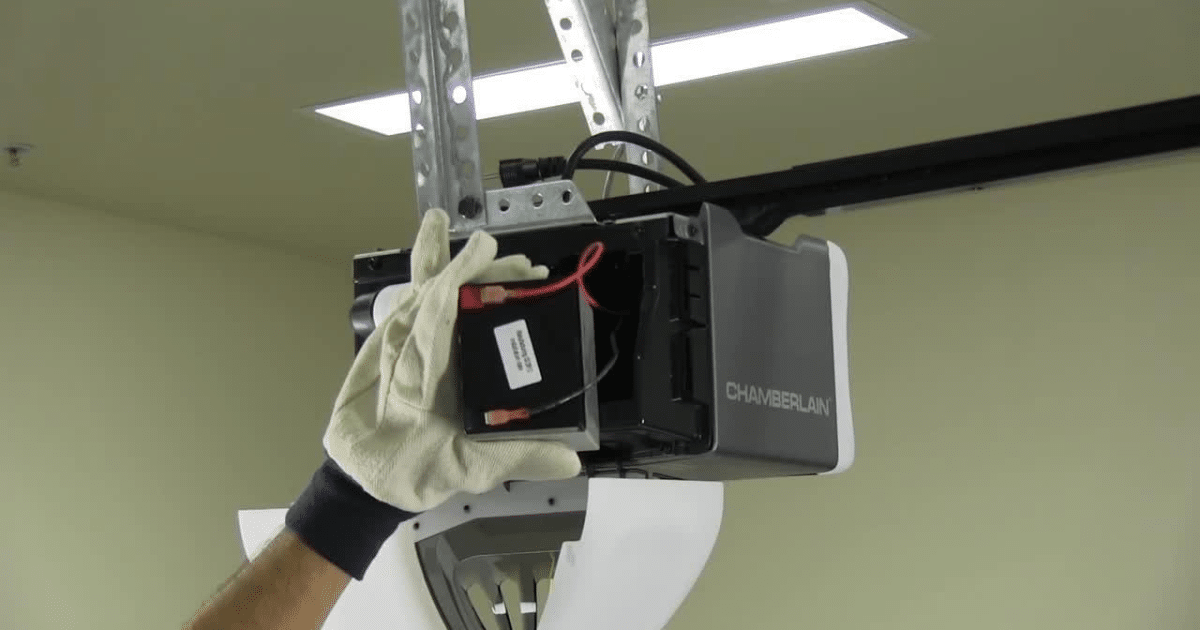
- Backup Battery Unit: Many modern garage door openers, especially brands like LiftMaster and Chamberlain, have a built-in backup battery inside the motor head unit. This keeps the door running during power outages. These units typically use a 12-volt rechargeable lithium or lead-acid battery pack.
Quick Reference: Battery Types by Component
Component | Common Battery Type |
Handheld Remote | CR2032, AA, or AAA |
Outdoor Keypad | 9-volt or AA |
Backup Battery Unit | 12-volt rechargeable pack |
Before buying a replacement, always check the owner’s manual or the existing battery label inside the compartment. Using the wrong battery type can cause poor performance or even damage the unit.
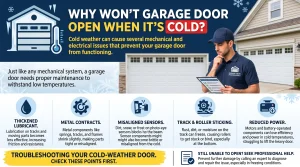
Local Insight: Cold Wisconsin winters significantly reduce battery performance. Batteries that would normally last two years in a mild climate may only last one year or less in Sussex due to repeated freeze and thaw cycles.
Already have a LiftMaster opener and want to get the most out of it? Check out this helpful resource: How to Program a LiftMaster Garage Door Opener.
Five Signs Your Garage Door Opener Battery Is Dying
The battery rarely dies without warning. Most of the time, there are clear signs that show up days or even weeks before the battery fully gives out. Learning to recognize these signals early can save a lot of frustration.
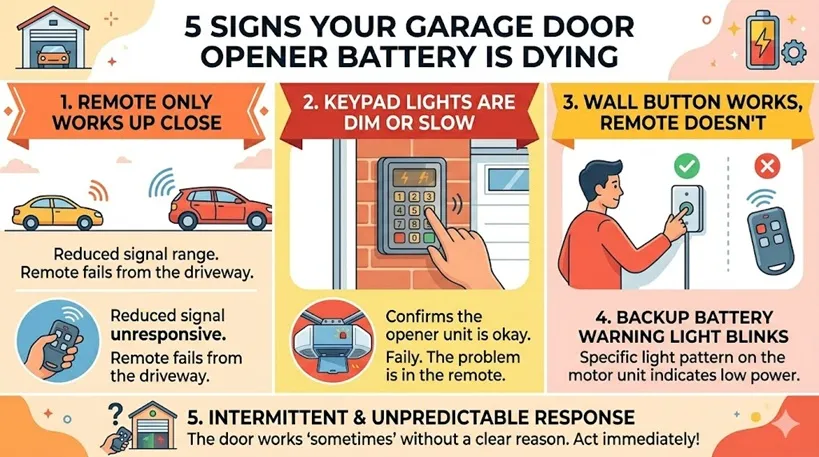
- Sign 1: The Remote Only Works Up Close. If the remote used to work from the end of the driveway but now only responds when you are right in front of the door, the battery is losing its signal strength. This is one of the earliest and most reliable warning signs.
- Sign 2: The Keypad Lights Are Dim or Slow to Respond. A healthy keypad lights up quickly when buttons are pressed. A dim display or a delayed response usually points to a weak battery rather than a technical fault.
- Sign 3: The Door Responds to the Wall Button But Not the Remote. This is a very telling symptom. When the hardwired wall button still works, but the remote does not, the opener unit itself is functioning fine. The problem is almost certainly in the remote battery.
- Sign 4: The Backup Battery Warning Light Is Blinking. Most LiftMaster, Chamberlain, and Genie openers have a small indicator light on the motor unit. A steady blink or a yellow warning light often means the backup battery is running low. Check your model’s manual to decode the blinking pattern.
- Sign 5: Intermittent and Unpredictable Response. The door works sometimes but not others, without any clear reason. This on-and-off behavior is a classic sign of a battery that is in its final stage of life. Many homeowners in Sussex and Menomonee Falls have reported this exact pattern before a complete battery failure.
Expert Insight: Intermittent failure is the warning sign homeowners most commonly ignore. If the door behaves inconsistently, do not wait for it to stop working completely. Replace the battery as soon as the pattern starts.
If the remote is showing any of these signs, it may also be time to evaluate the remote itself. Learn more about keeping access secure and reliable in this related read: LiftMaster Garage Door Opener Remote in Sussex: Easy Access & Security.
Tools Needed Before Getting Started
No special tools are required for most battery replacements. Here is what to have on hand before starting:
- A small flathead screwdriver (for prying open battery compartments)
- The correct replacement battery (refer back to Section 1)
- A clean, dry cloth (for wiping contacts)
- The owner’s manual (for model-specific instructions)
Pro Tip: Always use name-brand batteries like Duracell or Energizer. Discount batteries from dollar stores tend to fail much faster, especially in Wisconsin’s cold climate. The small price difference is not worth the hassle of replacing them twice.
If the opener is still acting up even after having everything ready and replacing the battery, the issue might go beyond a simple swap. This guide is a great next step: How to Troubleshoot Your LiftMaster Garage Door Opener: Easy Steps.
How to Replace the Battery in a Garage Door Remote
Replacing the battery in a handheld garage door remote is a straightforward process that most homeowners can handle in just a few minutes.
- Step 1: Find the Battery Compartment. The compartment is usually located on the back of the remote. Some models have a sliding panel, while others require a small flathead screwdriver to pop it open.
- Step 2: Take Note of Battery Orientation. Before removing the old battery, take a quick photo with a phone or look for the positive (+) and negative (-) markings inside the compartment. Installing the new battery backward is one of the most common mistakes.
- Step 3: Remove the Old Battery. Gently slide or lift the old battery out. If it looks corroded or leaking, use a dry cloth or a cotton swab to carefully clean the metal contacts before inserting the new one.
- Step 4: Insert the New Battery. Match the positive and negative ends to the markings inside the compartment. Press it in firmly until it seats properly.
- Step 5: Close the Compartment and Test. Snap or slide the cover back into place. Stand near the garage door and press the button. If the door responds, the replacement was successful.
What to Check If the Remote Still Does Not Work After a New Battery:
- The remote may need to be reprogrammed to the opener
- There could be signal interference from nearby electronics
- The internal antenna wire on the opener may be damaged
- The logic board inside the opener unit may be failing
If none of those steps resolve the issue, it is worth having a Sussex garage door technician take a look. A malfunctioning remote that persists after a battery swap often points to a deeper issue that goes beyond basic DIY.
How to Replace the Battery in a Garage Door Keypad
Outdoor keypads are exposed to everything: rain, snow, wind, and the dramatic temperature swings that Sussex, WI experiences throughout the year. Replacing the battery in a keypad is simple, but there are a few extra things to watch for.
- Step 1: Locate the Battery Compartment. Most keypads have a small compartment at the bottom or back of the unit. Some flip open, while others require a screwdriver.
- Step 2: Check for Corrosion Before Inserting the New Battery. This step is especially important for keypads that face north or west, where exposure to wind and moisture is higher. Corroded contacts will prevent even a fresh battery from working properly. Clean any visible residue with a dry cloth before proceeding.
- Step 3: Insert the New Battery and Test. Replace with the correct battery type (usually a 9-volt), press a few keys to confirm the display lights up brightly, and test the keypad code to make sure it activates the door.
What to Check If the Keypad Still Does Not Work:
- The keypad housing may have cracked from freeze-thaw cycles, allowing moisture inside
- The access code may need to be reprogrammed after a battery change on certain models
- Buttons that are physically stuck or worn down may need replacement
Seasonal Reminder for Sussex Homeowners: Every October, before the cold sets in, inspect the keypad housing for cracks and test the battery. Catching a weak battery before winter is much easier than troubleshooting a dead keypad in January.
How to Replace the Backup Battery in the Opener Unit
The backup battery is the most overlooked component in a garage door system. Most homeowners do not even know it exists until the power goes out and the door stops working.
- What the Backup Battery Does: During a power outage, the backup battery takes over and allows the garage door to open and close normally. For homeowners in Sussex and Waukesha County, where spring storms and winter ice can knock out power without warning, this battery is genuinely important.
- Where It Is Located: The backup battery is typically housed inside the plastic motor head unit mounted on the ceiling of the garage. On most LiftMaster and Chamberlain models, there is a small panel or compartment that can be accessed from the front or side of the unit.
- How to Know It Needs Replacement: Most modern openers display a warning light when the backup battery is low. LiftMaster models often show a blinking yellow or orange light on the motor unit. Some models will also beep at intervals as a reminder.
- Average Cost: Backup battery replacements are an affordable maintenance expense for most homeowners. The average cost of a replacement backup battery pack is reasonable and considered standard upkeep for the opener unit.
- Safety Note: Before attempting to access the motor unit, disconnect power to the opener at the outlet or breaker. If there is any uncertainty about accessing the internal components, contact a local professional. Opener units contain electrical components that can cause injury if handled incorrectly.
- Professional Recommendation: If the backup battery keeps dying quickly after replacement, the issue may not be the battery itself. A failing charging circuit inside the opener could be draining the battery faster than normal. That is a job for a qualified technician.
Common Mistakes Homeowners Make When Replacing Garage Door Batteries
Even a simple battery replacement can go wrong. These are the most frequent mistakes seen by garage door professionals serving the Sussex and New Berlin areas.
- Mistake 1: Installing the Battery Upside Down. Reversed polarity is the number one error. Always match the positive and negative ends to the diagram inside the compartment.
- Mistake 2: Using an Expired or Wrong Battery Type. Check the expiration date on the battery packaging. Expired batteries may appear new but perform poorly from the start. Also, confirm the battery type matches what the device requires.
- Mistake 3: Ignoring Corrosion on the Battery Contacts. Dirty or corroded contacts create resistance that prevents the battery from delivering power properly. Always clean the contacts before inserting a new battery.
- Mistake 4: Assuming the Battery Is the Only Problem. Sometimes the battery is fine, and the real issue is a misaligned safety sensor, a failing receiver board, or a remote that needs reprogramming. Replacing the battery without checking these possibilities can lead to unnecessary frustration.
- Mistake 5: Forgetting to Reprogram the Remote. On certain garage door opener models, removing the battery resets the remote’s memory. If the door does not respond after a fresh battery, check whether the remote needs to be paired to the opener again.
How to Make Garage Door Opener Batteries Last Longer
Prevention is always better than an emergency fix. These practical tips will extend battery life and reduce the chance of being caught off guard.
- Tip 1: Replace on a Set Schedule. Do not wait for the battery to die completely. Set a reminder to replace the remote and keypad batteries every 12 to 18 months. In Sussex, WI, the best time to do this is in early fall before winter temperatures set in.
- Tip 2: Keep Remotes Away From Heat. Leaving a remote in a hot car during the summer can degrade the battery faster than normal use. Move it out of direct sunlight or away from the glove compartment during hot months.
- Tip 3: Clean Battery Contacts Annually. Once a year, open the battery compartment and wipe the metal contacts with a dry cloth. This keeps the connection clean and maximizes battery output.
- Tip 4: Switch to Lithium Batteries for Cold Weather. Lithium batteries perform significantly better in cold temperatures compared to standard alkaline batteries. For homes in Sussex where winter temperatures can drop well below freezing, lithium is the smarter choice for both remotes and keypads.
- Tip 5: Keep a Spare Battery in the Glove Box. This one is simple but surprisingly effective. Keep a spare CR2032 or 9-volt battery in the car so a dead remote never means being locked out of the garage.
When to Stop DIYing and Call a Professional
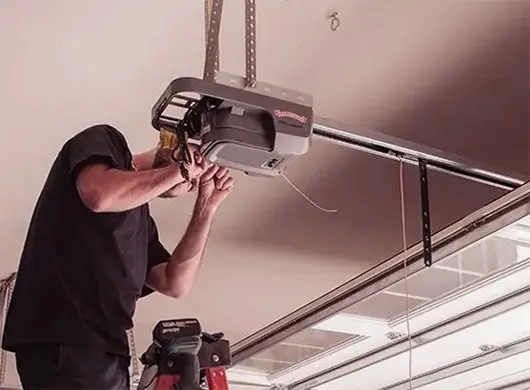
Battery replacement handles a large percentage of garage door opener issues, but not all of them. Here are the situations where calling a local Sussex garage door professional is the smarter move.
- The Battery Swap Did Not Fix the Problem: If the door still does not respond after a confirmed fresh battery installation, the issue likely goes deeper. Signal interference, a dead receiver board, or remote deprogramming all require professional diagnosis.
- There Are Unusual Sounds, Smells, or Visible Damage: Burning smells, frayed wires, or buzzing sounds coming from the opener unit are serious warning signs. Do not continue using the opener in this condition.
- The Backup Battery Keeps Draining Too Fast: If a new backup battery dies within weeks, the charging circuit may be faulty. This is an internal electrical issue that requires a trained technician.
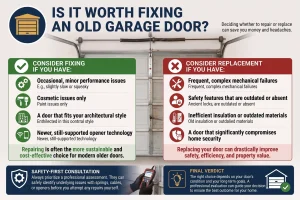
- The Opener Is More Than 10 to 15 Years Old: Older opener units are more prone to compounding issues. At a certain point, the cost of repeated repairs exceeds the value of the unit. A professional can assess whether repair or full replacement makes more financial sense.
- Serving Sussex, WI and Waukesha County: When battery replacement is not enough, qualified local garage door technicians can provide same-day diagnostics for homes throughout Sussex, Menomonee Falls, Brookfield, New Berlin, and surrounding communities.
Keep Your Garage Door Running Before Winter Hits
A dead battery is one of the simplest garage door problems to solve, but also one of the most misdiagnosed. For homeowners in Sussex, WI, and throughout Waukesha County, staying ahead of battery replacements, switching to lithium before winter, and doing a quick fall inspection go a long way toward avoiding unexpected failures.
When a battery swap does not solve the problem, calling a trusted local garage door professional is always the smarter move. Some issues look simple on the surface but have deeper causes that only a trained eye can spot. In some cases, an aging or repeatedly failing opener may point to the need for a full garage door opener installation rather than another round of repairs. Do not wait for the problem to show up on the coldest morning of the year.
Your Local Garage Door Experts in Sussex, WI
Anytime Garage Doors has been a trusted name in Sussex, WI, and the greater Waukesha County area for homeowners who need reliable, honest, and experienced garage door service. From routine battery checks to full system diagnostics, our team brings real hands-on expertise to every job, big or small. When the garage door is not performing the way it should, we are the team Sussex homeowners count on to get it right the first time. Ready to schedule a service or get a free consultation? Contact us today or give us a call, and let us keep your garage door running safely all year long.