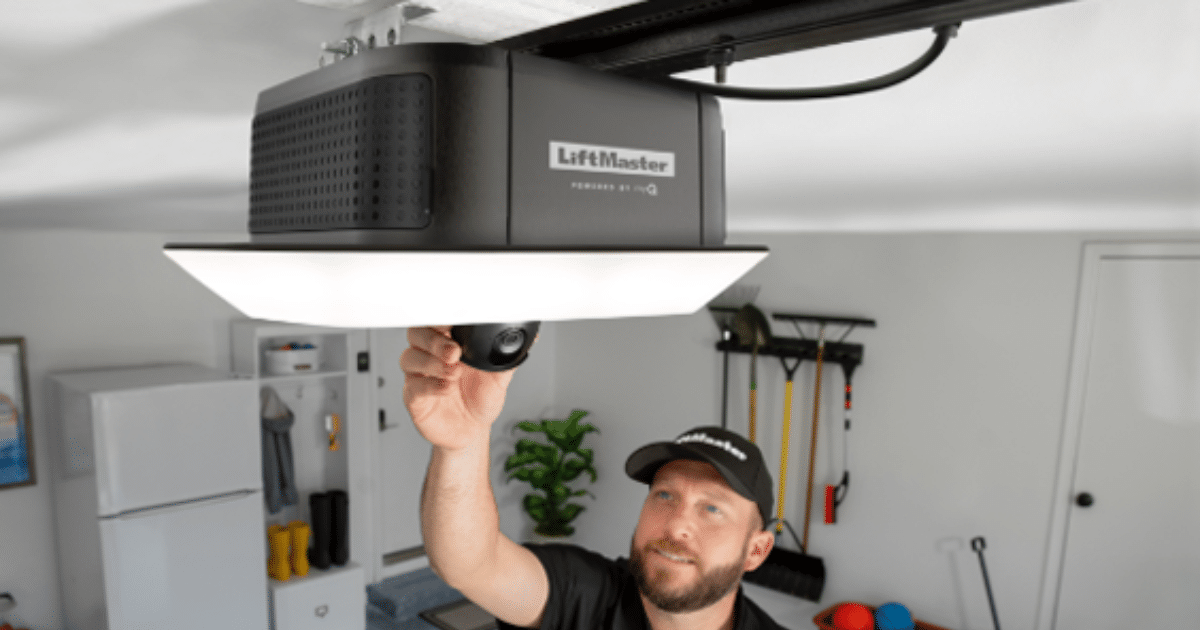
Walking into your garage on a cold Sussex, WI morning and pressing the button to get absolutely nothing is one of the most frustrating ways to start a day. The good news is that most LiftMaster garage door opener problems are easier to diagnose than most people think. Whether the door stops halfway, reverses on its own, or makes a strange noise, there is usually a clear reason behind it.
LiftMaster is one of the most trusted names in the garage door industry, but even reliable equipment runs into trouble over time, especially with Wisconsin winters, humidity, and daily wear and tear. Most problems come down to five things: power issues, sensor misalignment, remote problems, travel limit settings, or mechanical wear. This guide breaks each one down in plain language so any Sussex, WI homeowner knows exactly what to check and what to do next, and when it is time to call in a professional for garage door opener repair.
Start Here: 5 Quick Checks Before Troubleshooting Your LiftMaster
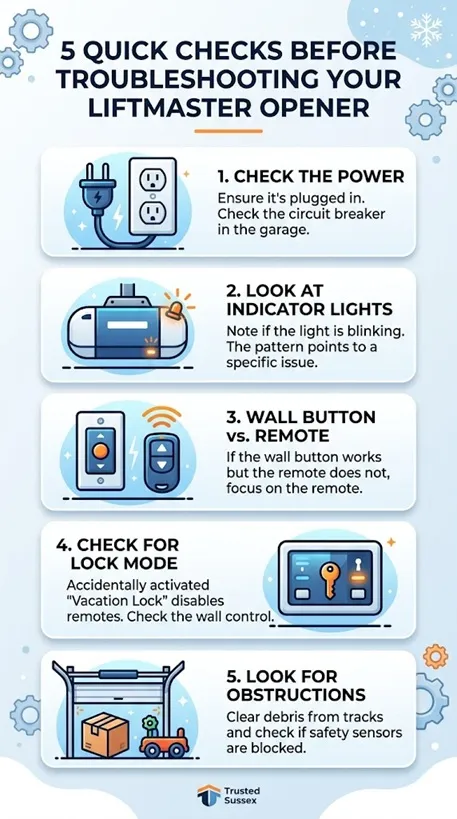
Before diving into specific problems, run through these five basic checks. They take less than two minutes and solve more problems than most people expect.
Check the Power Source
Make sure the opener is plugged in and the outlet is working. It sounds too simple, but a tripped circuit breaker or a bumped outlet switch is behind a surprising number of “dead” opener calls. Check the breaker box and look for any tripped switches in the garage.
Look at the Indicator Lights
LiftMaster openers use blinking light codes to communicate problems. Is the light blinking? How many times? The number of blinks points to a specific issue. More on this in a later section, but take note of the pattern right away.
Try the Wall Button vs. the Remote
Press the wall-mounted button inside the garage. If that works, but the remote does not, the problem is with the remote or its signal. If neither works, the issue is with the opener itself. This one simple test narrows things down fast.
Check for Lock Mode
Many LiftMaster openers have a vacation lock or security lock feature that disables all remotes. This mode is easy to accidentally activate. Look at the wall control panel for a lock indicator light or button.
Look for Obvious Obstructions
Walk the length of the garage door tracks and look for debris, toys, tools, or anything sitting in the door’s path. Also, check if the safety sensors near the floor are blocked by a box or knocked out of position.
Pro Tip: In Sussex, WI, power surges from summer storms and winter weather events are a common cause of opener issues. Installing a surge protector on the opener outlet is a simple, low-cost way to avoid unnecessary service calls.
If the remote passed all five checks but still is not working the way it should, the programming may need a fresh setup. Check out the complete guide on How to Program a LiftMaster Garage Door Opener for a full step-by-step walkthrough.
LiftMaster Remote or Keypad Not Working? Here Is What to Check
A remote or keypad that stops working is one of the most common LiftMaster complaints. The fix is often simpler than expected.
Replace the Batteries First
This is the number one fix for a non-responsive remote. Even if the batteries seem relatively new, swap them out. Weak batteries cause inconsistent performance before they die completely.
Reprogram the Remote
Power outages can wipe the remote’s programmed signal. This is especially common in Sussex, WI, after strong storms roll through Waukesha County. Reprogramming is usually done by pressing the “Learn” button on the motor unit and then pressing the remote button within 30 seconds.
Check the Remote’s Range
If the remote only works when standing right next to the opener, interference could be the issue. LED bulbs inside the garage are a known source of signal interference with LiftMaster openers. Try switching to a non-LED bulb in the opener unit and test again.
Inspect the Antenna on the Motor Unit
The small antenna wire that hangs from the motor unit needs to hang freely and point downward. If it is coiled up, tucked away, or damaged, signal reception drops significantly.
MyQ App Not Connecting
For homeowners using LiftMaster’s MyQ smart home system, a dropped WiFi connection is the usual suspect. Check the WiFi signal strength inside the garage. Garages with thick concrete or brick walls tend to have weak signals. Older routers also struggle to maintain a stable connection to smart garage devices.
Tip: In newer subdivisions around Sussex and nearby communities like Menomonee Falls and Pewaukee, wireless interference from neighboring smart home devices can occasionally disrupt remotes. If problems keep happening in a specific spot, signal interference may be worth investigating.
Average Cost Note: Professional remote reprogramming or antenna repair in the Sussex, WI area is typically resolved in a single service visit at a reasonable cost.
For a deeper look at getting the most out of a LiftMaster remote, including security features and access options built specifically for Sussex homeowners, the guide on LiftMaster Garage Door Opener Remote in Sussex: Easy Access & Security covers everything worth knowing.
LiftMaster Garage Door Won’t Open or Close All the Way
When the door stops halfway, reverses unexpectedly, or refuses to complete its full travel, one of these issues is usually responsible.
Travel Limits May Be Off
LiftMaster openers have adjustable travel limits that tell the motor how far to move the door in each direction. If these settings drift over time, the door stops short of fully open or fully closed. This is a common issue on older units.
Check for Binding or Resistance in the Tracks
Bent tracks, built-up debris, or worn rollers create friction that the opener’s motor reads as an obstruction. Visually inspect the full length of both tracks and look for any obvious bends, gaps, or gunk buildup.
Cold Weather Contraction
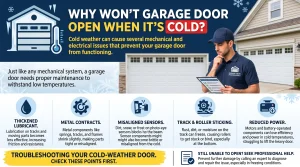
Sussex, WI winters are no joke. Metal components contract in cold temperatures, and a garage door that worked perfectly in October can start struggling by January. The hardware gets stiffer, lubrication thickens, and the motor has to work harder than normal.
Springs May Be Worn or Broken
Garage door springs do the heavy lifting. When a spring is worn or broken, the opener motor carries all that weight on its own. This strains the motor and often causes the door to stop or reverse before completing its travel. A broken spring is one of the most recognizable problems: the door will feel extremely heavy if lifted manually.
Force Settings May Need Adjustment
LiftMaster openers have sensitivity and force settings. If the opener senses too much resistance, it reverses as a built-in safety measure. Adjusting the force settings can resolve this, but it should be done carefully and by someone who knows what to look for.
Prevention Tip: Schedule a seasonal maintenance tune-up before Wisconsin winters arrive. Lubricating rollers, hinges, and the spring system every fall goes a long way in preventing these kinds of problems.
Important Safety Note: Broken springs are under extreme tension and are genuinely dangerous to handle without proper training and tools. This is always a job for a certified garage door professional.
One small thing that often gets overlooked when a remote stops triggering the door correctly is a dying battery. The complete guide on How to Replace Garage Door Opener Battery: The Complete Guide walks through the full process so it never gets missed again.
LiftMaster Garage Door Reverses Immediately? Check the Safety Sensors
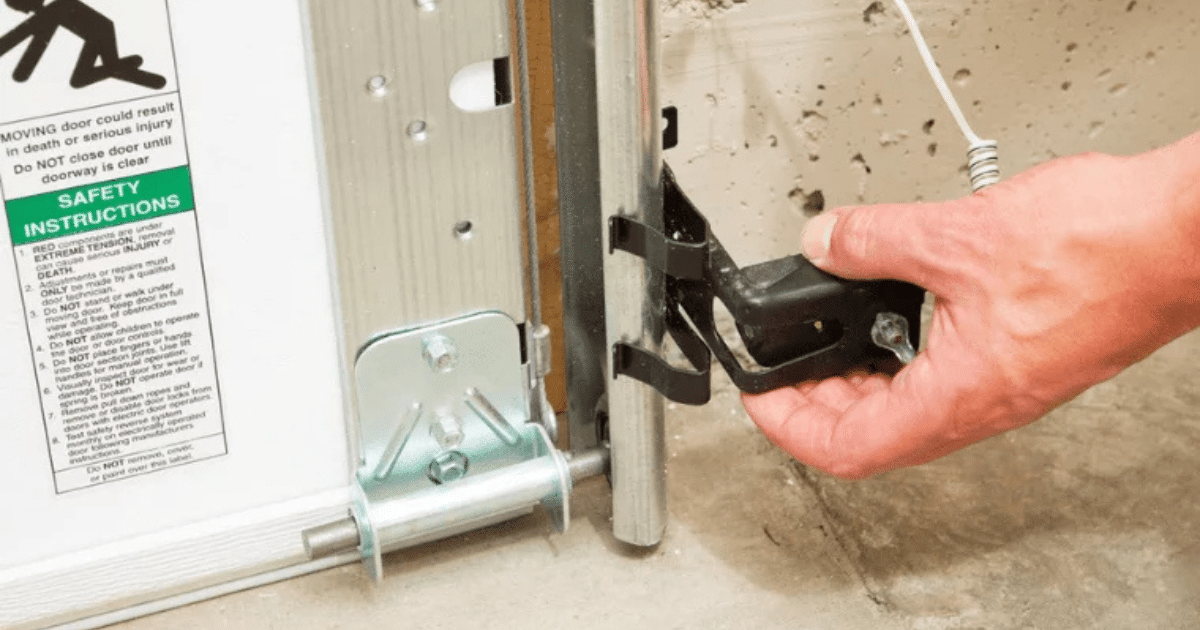
If the garage door starts to close and then immediately reverses back up, the safety sensors are almost always the cause.
Understand What the Sensors Do
Two small photo-eye sensors sit near the floor on each side of the garage door opening. They create an invisible infrared beam across the door path. If anything interrupts that beam, the opener reverses the door as a safety measure. This is a federal safety requirement on all residential garage door openers.
Check the Indicator Lights on the Sensors
Each sensor has a small LED light. The sending sensor (usually amber or yellow) should have a solid light. The receiving sensor (usually green) should also show a solid light. A blinking light on either sensor means the beam is interrupted or the sensors are out of alignment.
Look for Dirt or Spider Webs
A dirty lens on either sensor can block the beam just enough to trigger a reversal. This is one of the most common and easiest fixes available. Wipe both sensor lenses with a clean, dry cloth and test the door again.
Check for Sunlight Interference
Direct sunlight shining into the receiving sensor can overload it and cause false readings. This is especially common in west-facing garages during late afternoon hours. If the door works fine in the morning but not in the evening, sunlight interference is worth investigating.
Inspect the Sensor Wiring
Look at the thin wires running from each sensor up along the door frame. Rodents, lawn equipment, and general garage activity can nick or pinch these wires. Any visible damage to the wiring should be addressed by a professional.
Tip: If sensors keep getting bumped out of alignment, ask a local technician about sensor protection brackets. It is a small addition that prevents repeat service calls.
What Do the Blinking Lights on a LiftMaster Mean?
LiftMaster uses blink codes the same way a car uses a check engine light. The number of blinks points to a specific problem.
- 1 Blink: Usually related to sensor wire issues
- 2 Blinks: Sensor obstruction or misalignment detected
- 4 Blinks: Safety sensor malfunction or communication issue
- 5 Blinks: Often points to a logic board or internal wiring problem
- Continuous Blinking: Typically indicates a power or circuit issue
Tip: Take a short video of the blinking pattern on a phone before calling for service. It gives the technician a head start on diagnosis and can speed up the repair visit.
Note that blink codes can vary slightly between LiftMaster model generations. Always cross-reference with the label inside the motor unit cover or the owner’s manual for the specific unit.
LiftMaster Motor Running But Door Not Moving
Hearing the motor run without the door moving is a sign that something in the mechanical drive system has failed or been disconnected.
Check the Disconnect Cord
The red emergency release cord disconnects the garage door from the opener trolley. This is meant for use during power outages so the door can be opened manually. If this cord is pulled and not re-engaged, the motor will run freely without moving the door. Re-engaging the trolley usually involves pulling the cord toward the door and then manually moving the door until it clicks back into the carriage.
Stripped Drive Gear
Inside the motor unit, a plastic drive gear meshes with the worm gear on the motor shaft. This gear wears down over years of use and eventually strips. When that happens, the motor spins, but nothing moves. This is one of the more common internal repairs on older LiftMaster units.
Chain, Belt, or Screw Drive Issues
Depending on the model, the opener uses a chain, belt, or screw drive system to move the trolley. Inspect the drive for visible slack, damage, or breakage. A sagging chain or snapped belt will prevent door movement entirely.
Trolley Carriage Damage
The trolley carriage rides along the rail and connects the drive system to the door arm. Over time, the carriage can crack, wear out, or break. A damaged carriage is a common culprit when the motor runs but the door stays put.
Average Cost Note: Gear and sprocket replacement is one of the more common LiftMaster repairs. Parts and labor for this type of repair in Sussex, WI typically fall within a mid-range service call. Costs vary depending on the model and the extent of the damage.
When to Stop Troubleshooting and Call a Garage Door Expert in Sussex, WI
Some garage door problems are safe to investigate on your own. Others are not. Knowing the difference matters.
Call a professional for any of the following situations:
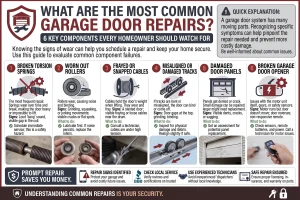
- Broken Torsion or Extension Springs: These springs are under thousands of pounds of tension. Attempting a DIY repair without the right tools and training has resulted in serious injuries. This is always a professional job, no exceptions.
- Damaged Cables: Lift cables work in tandem with the springs and carry enormous tension. Frayed or broken cables should never be handled without professional equipment.
- Logic Board or Electrical Failures: Diagnosing internal circuit board problems requires experience and specialized knowledge. Guessing on electrical repairs can cause further damage or create safety hazards.
- Door Off Its Tracks: A door that has derailed from its tracks is unstable and can cause serious injury or property damage if moved without proper realignment.
- Repeat Problems That Keep Coming Back: If the same issue has been “fixed” more than once without lasting results, there is usually a deeper underlying cause that needs a professional diagnosis.
Garage door professionals serving Sussex, WI, and the broader Waukesha County region bring hands-on experience that goes beyond what any troubleshooting guide can cover. A proper diagnosis from a certified technician protects both the homeowner and the equipment.
5 Simple Ways to Prevent LiftMaster Problems Before They Start
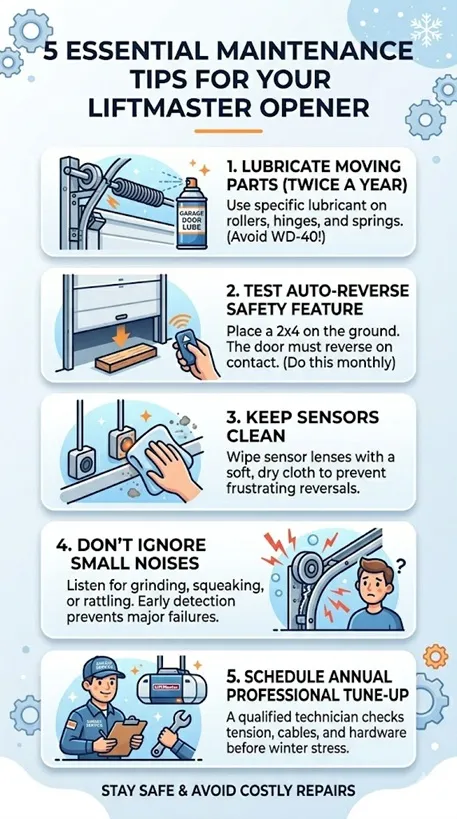
The best repair is the one that never has to happen. These five habits keep LiftMaster openers running smoothly year after year.
Lubricate Moving Parts Twice a Year
Use a garage door-specific lubricant on rollers, hinges, springs, and the rail. Do not use WD-40, which is a solvent and not a true lubricant for garage door hardware. The best times to do this are spring and fall, before extreme temperatures arrive.
Test the Auto-Reverse Safety Feature Monthly
Place a flat 2×4 board on the ground in the center of the door path and close the door. The door should reverse when it makes contact with the board. If it does not, the force settings or sensor system needs attention right away. This is a critical safety check, especially in homes with children or pets.
Keep Sensors Clean
Wipe both sensor lenses with a soft, dry cloth once a month. Garages collect dust, dirt, and cobwebs faster than most rooms in a home. Keeping the lenses clean takes about 30 seconds and prevents a lot of frustrating reversals.
Do Not Ignore Small Noises
Grinding, squeaking, rattling, or clunking sounds are the garage door system’s way of asking for attention. Catching a small mechanical issue early almost always costs less than waiting until the system fails completely.
Schedule Annual Professional Tune-Ups
A yearly inspection from a qualified garage door technician in Sussex, WI, covers everything from spring tension and cable condition to hardware tightening and opener settings. This is especially valuable before Wisconsin winters, when cold temperatures put extra stress on every moving part.
Most LiftMaster Problems Have Simple Solutions
A malfunctioning LiftMaster garage door opener does not always mean a major repair is needed. Starting with the basics like power, sensors, and the remote resolves the majority of common problems. For anything involving springs, cables, or electrical components, the safest and smartest move is to bring in a qualified professional rather than risk making the problem worse.
Sussex, WI, homeowners deal with the added challenge of extreme seasonal weather that puts extra stress on garage door systems year-round. Staying ahead of that wear with regular maintenance, seasonal lubrication, and annual inspections keeps the opener running reliably for years. For units that are beyond repair, a professional garage door opener installation is often the most practical and cost-effective solution. For fast, dependable LiftMaster repair and maintenance throughout Sussex, WI, and Waukesha County, reach out to a certified local garage door professional today.
Trusted Local Garage Door Service in Sussex, WI
When it comes to trusted garage door service in Sussex, WI, Anytime Garage Doors has built a strong reputation for showing up fast, diagnosing problems accurately, and getting the job done right the first time. From routine maintenance and LiftMaster repairs to full opener replacements, our team brings the experience and expertise that Sussex and Waukesha County homeowners have counted on for years. No overselling, no unnecessary repairs, just honest work from people who genuinely know garage doors inside and out. Ready to get your LiftMaster running like new? Contact us today or give us a call and experience the difference that real local expertise makes. We are always ready to help.