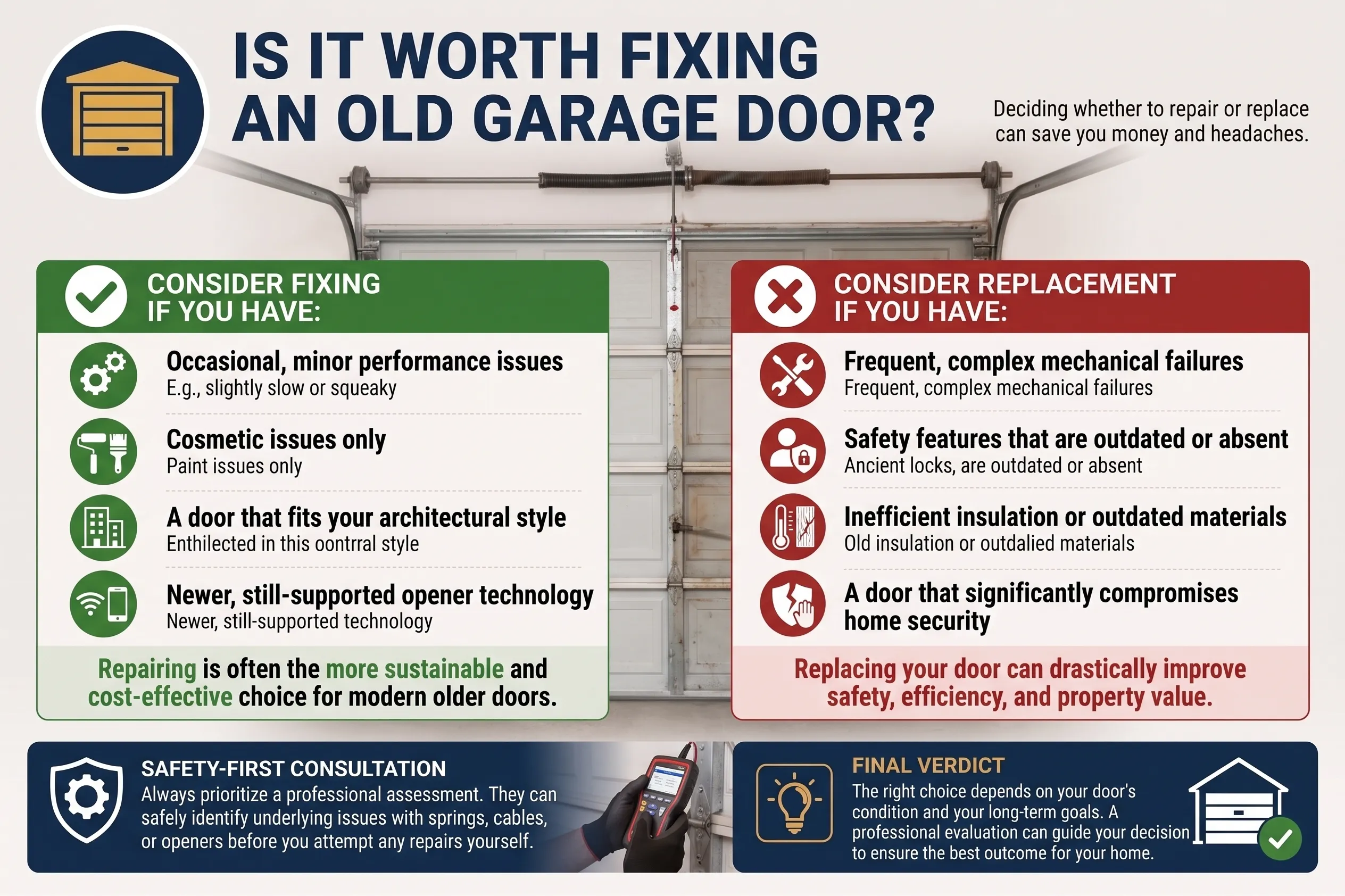
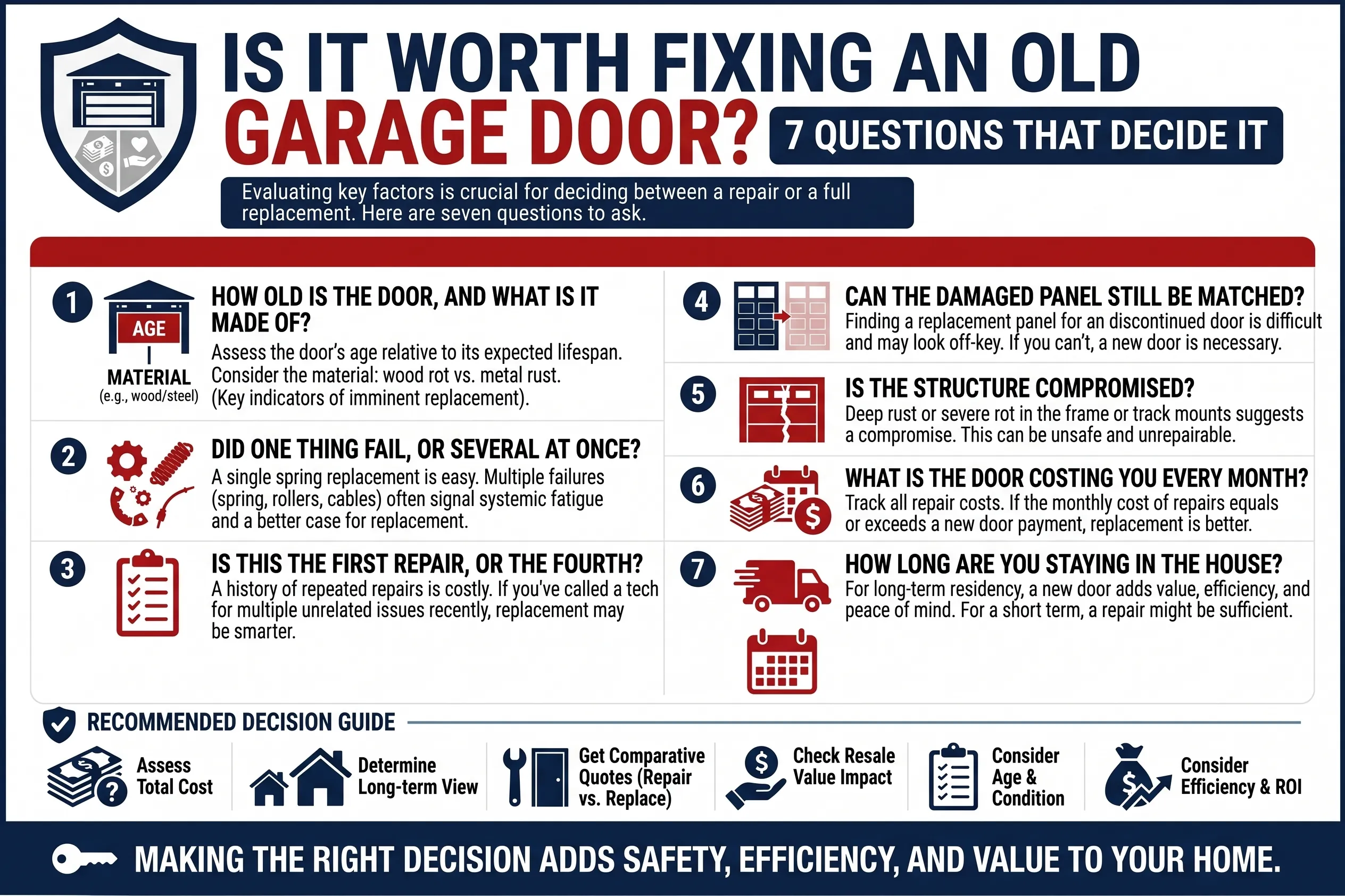
Fixing an old garage door is worth it when one component has failed on a door that is otherwise structurally sound. It stops being worth it when the failures start stacking. The seven questions that decide it: how old the door is and what it is made of, whether one system failed or several, whether this is the first repair or the fourth, whether a damaged panel can still be matched, whether the bottom sections are rusted or the structure is compromised, whether the door is costing you money every month in heat loss, and how long you plan to stay in the house. A single spring on a fifteen-year-old steel door is a clear repair. A third repair on a rusted door with a discontinued panel series is not.
Key Takeaways
- Age alone does not decide it. A well-built door can run twenty-five years or more with maintenance.
- The strongest signal to replace is not one big failure, it is several small ones arriving close together.
- Panel matching is the hidden dealbreaker. Once a series is discontinued, a cosmetic repair may not be possible at any price.
- Rust starting at the bottom section is structural, not cosmetic, and it does not stop.
- An uninsulated door on an attached garage is costing you money every winter whether or not anything is broken.
- If you are selling within two years, the calculation changes. Curb appeal and buyer perception carry real weight.
1. How Old Is the Door, and What Is It Made Of?
A garage door is not one thing with one lifespan. The door itself commonly lasts twenty to thirty years. The hardware on it lasts far less. That distinction resolves most of these conversations.
Springs run seven to ten years. Rollers run seven to ten. Cables run about the same. Openers run ten to fifteen. So a twenty-year-old door that needs springs is not an old door failing, it is a door on its second or third normal set of springs, which is exactly what should happen.
Material sets the outer limit. Steel doors are the most common and generally the longest-lived with the least attention. Wood doors are beautiful and demand real upkeep, since moisture is a constant threat at the bottom section, which is why our guides on wooden garage door panels and custom wood garage doors put so much weight on finish maintenance. Fiberglass doors resist rot but can crack in the kind of deep cold Wisconsin delivers most winters.
How Long Should a Garage Door Last?
Twenty to thirty years for the door, with maintenance, and less without it. Doors that get an annual service visit routinely outlast that. Doors that never get looked at until something breaks rarely reach the low end. The International Door Association has spent years pushing homeowner education on exactly this point, because most premature replacements are maintenance failures rather than product failures.
2. Did One Thing Fail, or Several at Once?
One failed component on a sound door is a repair, full stop. Three failing systems in the same visit is a different conversation. This is the question that does the most work.
A snapped spring is a repair. A snapped spring on a door where the cables are also frayed, the rollers are seized, and the opener is stripping its gear is a door telling you it has reached the end of a cycle. None of those parts failed early. They all reached the end of the same mileage at the same time, which is exactly what you would expect on a door that has run four times a day for two decades.
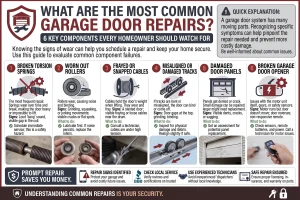
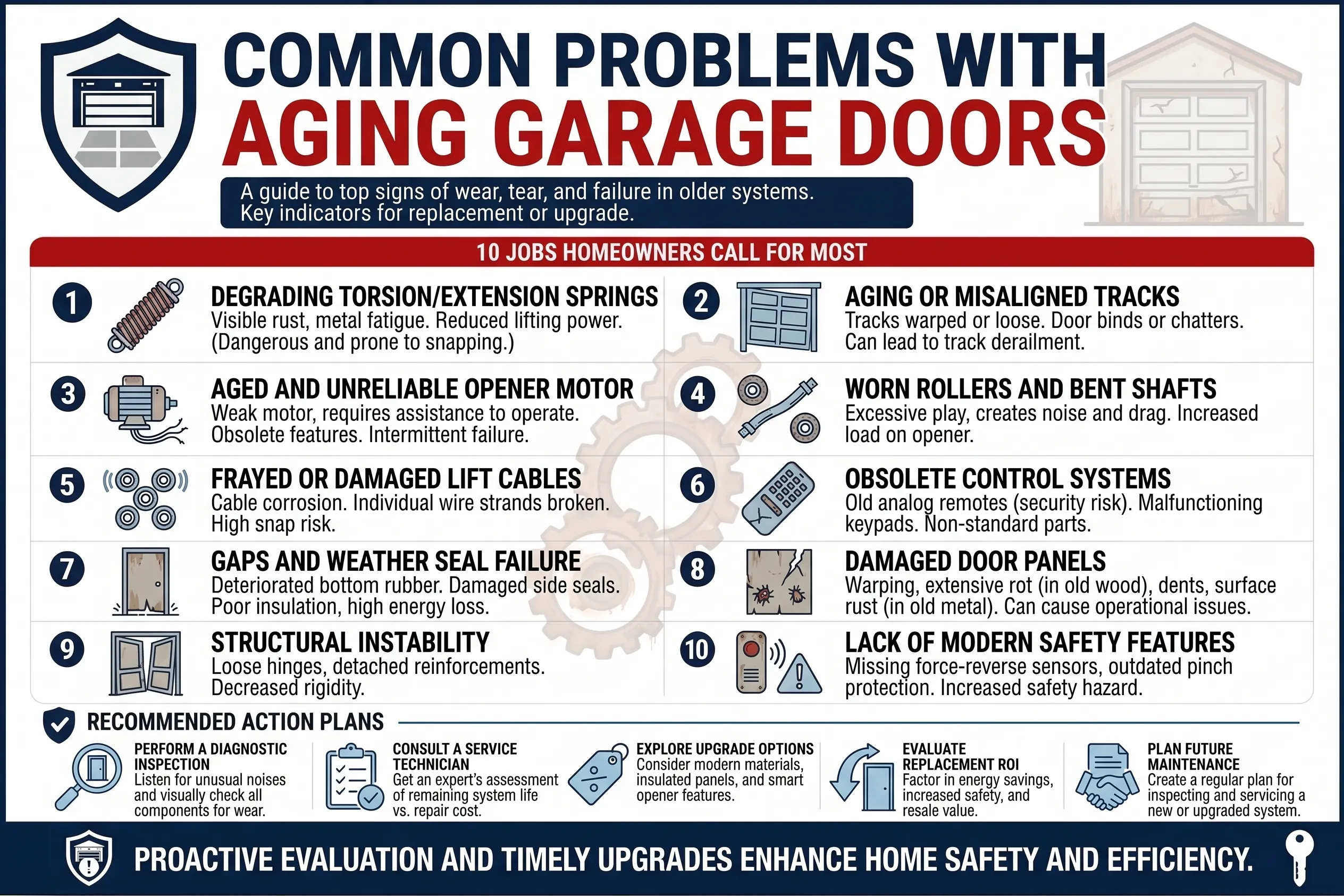
A good technician will show you each item and let you decide. If you want to know what the individual failures look like, our pillar guide on What Are the Most Common Garage Door Repairs? 10 Jobs Homeowners Call For Most covers each one, and our overview of common garage door problems homeowners face is a useful companion.
Should You Replace a Garage Door or Just the Opener?
Separate the two. The door and the opener have independent lifespans and independent price tags. A twenty-year-old door in good condition paired with a failing opener needs a new garage door opener, not a new door. Replacing both at once makes sense when the door is genuinely at end of life, because you save on the second installation visit. It does not make sense as an automatic pairing, and anyone presenting it that way should be asked why.
3. Is This the First Repair, or the Fourth?
Frequency tells you more than any single failure does. One repair every several years is normal ownership. Three repairs in eighteen months means you are funding a door in decline.
Keep a rough count. Most homeowners underestimate it, because each call felt small and separate at the time. When we pull up a service history and a customer sees four visits in two years written down, the decision usually makes itself.
The related trap is partial repairs. Replacing one cable and leaving the other, or one spring and leaving its twin, guarantees a return visit and inflates the count artificially. Our post on how often garage door cables should be replaced explains the pairing logic, and signs you need garage door repair covers the warnings that precede most of these calls.
When Repeat Garage Door Repairs Cost More Than Replacement
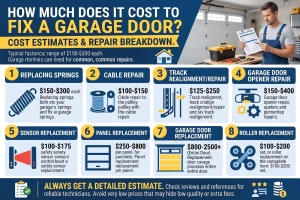
Add up what you have spent in the last two years, then compare it to a new door. If repairs are approaching a meaningful fraction of replacement and the door is past twenty, you are paying installments on a door you will replace anyway. The full breakdown of what individual repairs run is in How Much Does It Cost to Fix a Garage Door? 9 Things That Change the Price. This math is even sharper on a commercial overhead door, where cycle counts are ten times residential and downtime costs money directly, a difference we cover in our post on commercial versus residential door repair.
4. Can the Damaged Panel Still Be Matched?
This is the question homeowners never anticipate, and it ends more repair plans than anything else on the list. A single dented panel is often replaceable. A single dented panel on a discontinued series may not be replaceable at all.
Manufacturers retire door series regularly. Panel profiles change, embossing patterns change, and color formulations shift even within a product that is still in production. On a door under about ten years old, matching is usually straightforward. Past fifteen, it becomes a real question. Past twenty, it is frequently a no.
When matching fails, the options narrow to a visibly mismatched panel or a new door. Some homeowners accept the mismatch on a side-facing garage. Most do not on a street-facing one. If you are weighing the cosmetic side, our roundups of the best garage door designs and modern wood garage doors are a reasonable place to see what current options look like.
Why a Discontinued Panel Forces a Full Door Replacement
Sectional doors are engineered as a system. Panel height, hinge placement, and strut spacing all have to line up. A close-enough panel from another series often will not mount correctly, and forcing it compromises the door’s structure. When we tell a customer the panel cannot be matched, that is a manufacturing reality rather than a sales position, and you are welcome to verify it with the manufacturer directly.
5. Is the Structure Compromised?
Rust at the bottom section, cracked stiles, separated panel skins, or a door that no longer sits square in the opening are structural problems, and structural problems are replacement territory. Everything else on this list is a judgment call. This one mostly is not.
Rust is the common finding in Wisconsin, and it starts where water and road salt collect at the bottom edge. By the time it shows through the paint, it has usually been working from the inside for a while. Rust does not stop, and patching it buys a season.
Watch also for a door that binds in the opening, gaps that vary from one side to the other, or hinges pulling out of the panel skin. Those indicate the door has lost its geometry, which puts strain on every other component. Our post on the key elements that make a garage door functional and reliable walks through what a sound door should look like, and adjusting a garage door covers what can be corrected and what cannot.
Can You Repair a Rusted Garage Door?
Cosmetically, for a while. Structurally, no. Once the bottom section has perforated, the panel has lost strength where the door carries the most load and takes the most abuse. Sanding and repainting will look fine through the summer and come back through the paint by spring. A bottom section replacement is possible if the series is still made, which loops back to question four.
6. What Is the Door Costing You Every Month?
An uninsulated or poorly sealed door on an attached garage is a running expense, whether or not anything on it is broken. This is the part of the calculation homeowners most often leave out.
For an attached garage, especially one with living space above or a shared wall with a heated room, the door is one of the largest openings in the building envelope. An uninsulated single-layer steel door with a failed bottom seal loses heat continuously through a Wisconsin winter. Modern insulated doors change that materially, and they also cut noise substantially, which matters if there is a bedroom over the garage.
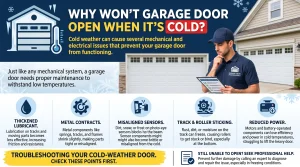
Noise is worth listening to on its own terms. A door that has become loud is usually telling you about worn parts rather than construction, and our posts on why a garage door squeaks when it opens and the best garage door maintenance practices cover the difference. Cold weather makes all of it worse, which we detail in Why Won’t My Garage Door Open When It’s Cold? 6 Things That Go Wrong in Winter.
Is an Insulated Garage Door Worth the Upgrade?
For an attached garage in this climate, usually yes. For a detached, unheated garage used for storage, the energy argument mostly disappears and the decision comes down to noise, durability, and appearance. Anyone selling you insulation for a detached garage on energy savings alone is stretching.
7. How Long Are You Staying in the House?
A repair is the right call if you are staying. A replacement often is if you are selling within a year or two. Same door, same failure, different answer.
If you are staying long term, fix what is broken and maintain the door. There is no prize for replacing a functional door early.
If you are listing soon, the garage door is a large fraction of your street-facing facade, and buyers read it as a proxy for how the house has been maintained. A tired, mismatched, or visibly repaired door works against you during exactly the ten seconds that shape a first impression. Our guide on choosing the right garage door covers style and material selection, and our residential garage door service page shows what we install.
Does a New Garage Door Add Value When Selling?
Garage door replacement consistently ranks near the top of remodeling projects for cost recouped at resale, which is a well-documented pattern in the national remodeling data. It is one of the few upgrades where the return argument is strong. If you are choosing a new door, Clopay’s guide on how to avoid garage door scams is worth reading before you take bids, since replacement is where the pressure tactics tend to appear.
Repair It or Replace It: The Signals
Signal | Points to repair | Points to replace |
Door age | Under 15 years | Over 20 years |
What failed | One component | Multiple systems at once |
Repair history | First or second in five years | Third or more in two years |
Panel damage | Series still in production | Series discontinued, no match |
Bottom section | Sound, surface wear only | Rusted through or perforated |
Door geometry | Sits square, runs smoothly | Binds, uneven gaps, hinges pulling |
Insulation | Detached or unheated garage | Attached garage, uninsulated door |
Timeline | Staying put | Selling within a year or two |
Read it as a tally rather than a checklist. One or two marks in the replace column on a door that is otherwise fine still means repair. Five or six means you are deciding when, not whether.
One caution on getting that assessment. A technician arriving for a single failed part and leaving with a replacement recommendation should be able to show you the structural evidence, not just describe it. Ask to see the rust, the panel model number, the mismatch. The industry maintains garage door repair scam awareness resources because premature replacement pitches are a known problem, and a second opinion costs you very little.
The Short Version
Most old garage doors are worth fixing. The ones that are not tend to announce themselves clearly: rust through the bottom section, a panel that cannot be matched, or three or four repairs stacked up inside two years. If none of those apply, a failed spring or a worn set of rollers is routine maintenance on a door with years left in it.
The mistake worth avoiding runs in both directions. Replacing a sound door because one part failed wastes money. Pouring repair after repair into a rusted door with no matchable panels wastes more, slowly, and you end up replacing it anyway.
If you want a straight assessment of which side your door falls on, Anytime Garage Doors has been making this call for homeowners across Sussex and the surrounding Waukesha and Milwaukee communities for years, and we will tell you when a repair is the better buy even though a replacement is the larger sale. Book a free assessment or look at what our garage door service visits include.