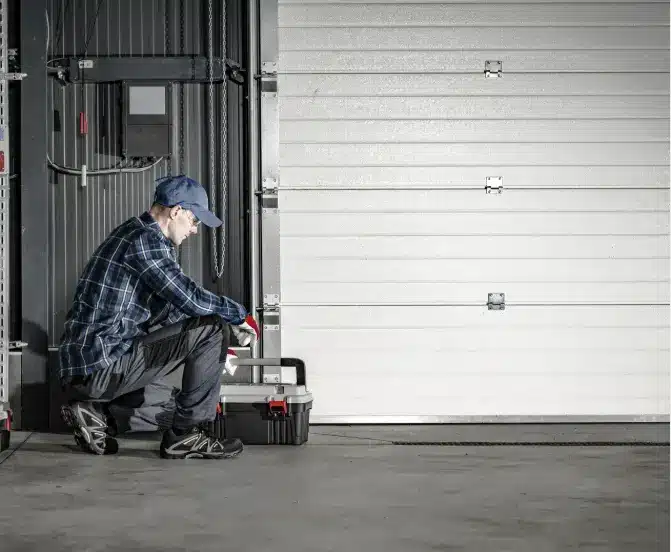
When a garage door suddenly stops working, it can pose a safety risk, create a security concern, or cause a major disruption to daily routines. Many homeowners and business owners are unsure what actually happens once they make an emergency garage door repair call.
This guide explains what the call involves, how information is gathered, and what professionals prepare before arriving on-site. Understanding the process helps reduce uncertainty and prevents decisions that could worsen the situation.
What Should You Do When a Garage Door Is Stuck, and You Need Help Fast?
A stuck garage door is usually a warning that something is overloaded, misaligned, or failing, so forcing it can shift the load into weak hardware and increase the safety risk.
Common reasons a door becomes stuck include:
- The garage door system loses balance, and the door’s weight becomes harder to control.
- Rollers, hinges, or track areas bind and stop smooth travel.
- A broken spring or cable problem reduces lift support and makes the door feel unusually heavy.
- The garage door opener senses abnormal resistance and stops the cycle.
- Sections or brackets shift, and the door jams or tilts.
To see how these issues can get worse when force is applied, read our blog on Should You Force a Stuck Garage Door or Call for Emergency Repair? to learn why forcing a stuck door can make the situation worse and when emergency service is the safer choice.
What Happens During an Emergency Garage Door Repair Call
Emergency calls move faster and stay safer when the details shared up front match what the technician needs to inspect and correct.
Before you call, read our blog on What’s the Safest Way to Troubleshoot a Stuck Garage Door? to confirm the situation is safe to report, then use the steps below to share clear details that support faster emergency garage door repair dispatch.
The Call Starts With Safety Screening and Door Status Questions
The first part of an emergency garage door repair call focuses on rapid triage so the dispatcher understands the door’s condition, the safety risk, and the urgency before assigning the appropriate response in Sussex, WI.
- Door position, such as stuck open, stuck closed, or stopped mid-travel
- Visible damage, including bent track, cracked panels, or loose hardware
- Vehicle access, including a car trapped inside or blocked outside
- Door stability, especially if it feels unusually heavy or shifts during attempts
- Sound events, such as a loud snap or bang, right before the failure
- Site safety, including pets, kids, and obstacles near the opening
After these details are confirmed, the dispatcher can prioritize the call correctly and send a technician prepared for the most likely failure category.
You Share Symptoms, Sounds, and What Happened Right Before the Issue
Sharing what you noticed helps the dispatcher narrow the likely failure and prepare the technician with the right inspection plan before arrival.
- Clicking, grinding, scraping, or a sharp snap you heard during operation
- Crooked travel, shaking, or the door shifting toward one side of the door you saw
- Opener response, such as lights turning on but no movement, or a brief attempt to run
- Short movement, such as the door lifting a few inches and stopping again
- Timing, including whether it failed the first time you used it that day
- Trigger events, such as weather changes, power flickers, or an impact shortly before the issue
Clear symptom details help reduce guesswork during dispatch and speed up the path to a safe, accurate repair once the professional arrives.
The Team Confirms Door Type, Opener Type, and Property Use
Confirming the door setup and how the property uses it helps match the technician, tools, and parts to the situation before arrival.
- Door size and build, such as single, double, insulated, or custom construction
- Property use, including a home setting or a commercial garage door location
- Opener style and controls, including keypad, remote, or app-based behavior
- Spring setup, including torsion spring hardware mounted on a metal shaft
- Side-mounted spring layout, including extension springs running along the track area
- Service history, including prior work on garage door parts that could affect fit and hardware matching
Accurate system details early in the call reduce delays and improve the chance of completing the repair in one visit.
Address, Access, and Site Constraints Are Verified to Prevent Delays
Providing location and access details during the call helps reduce setbacks and supports a faster start once the technician arrives.
- Street address and the best entry point for the service vehicle
- Gate or keypad requirements that control entry to the property
- Garage placement details, such as detached access or a rear-facing opening
- A walkway or shared area blockage caused by the stuck door
- On-site decision-maker who can approve work and answer questions
- Photos of visible conditions to support dispatch planning
Solid logistics information helps the response stay on schedule and keeps the service visit focused.
Availability, Dispatch Priority, and ETA Expectations Are Set Clearly
Setting expectations during the call helps match urgency to the right response plan and reduces surprises about timing, staffing, and what can be completed on the first visit.
- Priority level based on safety hazard, security exposure, and access impact
- Estimated arrival window and the best method for updates
- After-hours factors that can affect routing and supply availability
- Stabilization is needed if the door is unsafe to leave as-is
- Added support requirements for heavier garage doors or complex setups
- Follow-up likelihood if parts must be ordered for a complete repair
A realistic dispatch plan helps protect safety, reduce downtime, and keep the response organized from start to finish.
The Call Ends With a Clear Summary and Next-Step Confirmation
Wrapping up the call with a clear recap helps you understand what the team plans to do next and what information has been confirmed for the response.
- Symptom recap and the most likely failure categories based on what you reported
- Response plan, such as urgent repair now versus stabilization first, and a return visit
- Contact confirmation and the on-site decision-maker for approvals
- Safety note regarding the operation of your garage door should pause until inspection
- Repair process overview, so you know what to expect when the technician arrives
- Final service window confirmation and how dispatch updates will be shared
A complete call summary reduces confusion and keeps the emergency response moving in the right direction.
Emergency Garage Door Repair for Residential and Commercial Doors in Sussex, WI
Residential and commercial calls have different priorities, so the service plan is shaped by how the door is used, how urgent access is, and the level of safety exposure the situation creates.
For residential garage door repair, service commonly focuses on:
- Stabilizing the opening so it does not slam, drift, or bind during travel
- Inspecting tracks, rollers, hinges, and attachment points for movement issues
- Checking the balance behavior so the door does not feel unusually heavy
- Reviewing visible wear on load-bearing hardware and moving parts
- Confirming sensor behavior and reversal performance for safe closing
- Identifying related wear patterns that can trigger repeat stoppages
Because these checks align directly with safe closing behavior and entrapment protection expectations, the U.S. Consumer Product Safety Commission explains the key safety requirements for automatic residential operators and why compliant operation matters.
For commercial garage door repair, service commonly prioritizes:
- Confirming access needs for deliveries, vehicles, and security timing
- Inspecting track alignment, high-wear rollers, and hinges
- Checking impact damage, bent sections, and traffic-related misalignment
- Verifying lift support components sized for door weight and cycle demands
- Confirming stable movement under repeated open-close cycles
- Identifying failure points that could create a safety hazard for staff
Since these priorities are closely tied to workplace safety and safe system operation around high-use openings, DASMA’s garage door system safety tips reinforce why controlling hazards, maintaining stable operation, and keeping the area around moving doors safe matter.
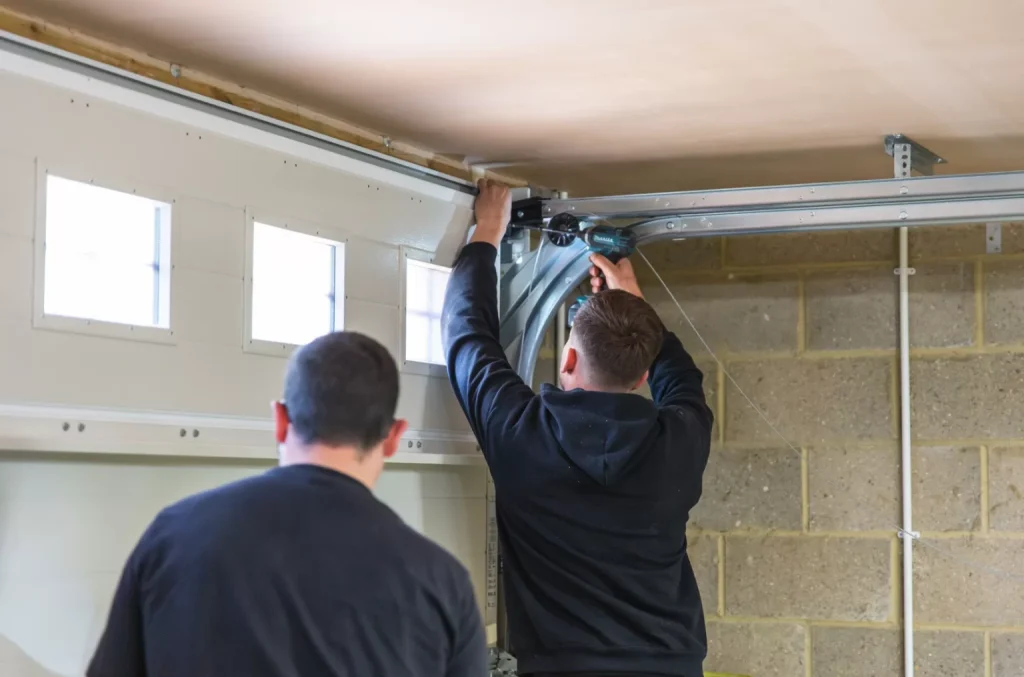
Repairs Commonly Completed During Emergency Service
Many urgent calls are resolved the same day, but only after inspection confirms what failed and how the problem affects safe movement, because hidden load shifts can create a safety hazard and raise the risk of accidents when stressed components release.
Common emergency repairs that may be completed during service include:
- Garage door spring repair when the lift support changes suddenly and the door’s weight becomes harder to control.
- Garage door cable repair when garage door cables slip, fray, or break, and lifting becomes uneven.
- Garage off-track repair when the rollers bind or the door twists and jams during door opening.
- Garage door opener repair when the garage door opener clicks, stalls, reverses, or stops under load due to abnormal resistance.
These repair categories focus on restoring balanced lifting, straight travel, and controlled operation so the door can be used safely again after an emergency call.
When Emergency Damage Leads to Replacement Planning
Some failures are too severe for a stable repair, so the focus shifts to a safe fit, long-term reliability, and restoring dependable access when the door has major damage or recurring breakdowns.
When garage door installation is the most reliable path, planning usually includes:
- Opening measurements, headroom clearance, and track layout requirements
- Insulation and reinforcement needs based on daily use and exposure
- Hardware rating matched to heavier garage doors when extra strength is required
- New garage door selection based on security, durability, and performance expectations
- Removal coordination for damaged sections and haul-away requirements
- Replacement process timing, ordering steps, and what happens on install day
If the door reached this point after repeated forcing or continued operation while unstable, read our blog, Can Forcing a Stuck Garage Door Make the Problem Worse? to understand how pushing through resistance can compound damage and lead to larger corrective work.
What Average Cost May Depend On for Emergency Repairs
Emergency situations vary widely, so the average cost may depend on what failed, how many garage door parts are affected, and how complex the repair process becomes after inspection.
Average cost may depend on:
- Repair type and labor time needed to restore safe operation
- Stabilization-only work versus full restoration during the same visit
- The number of parts involved after the failure is confirmed
- Hardware needs are based on the type of garage door and its setup
- Wear was found during visual inspection and system testing
- Follow-up needs if parts must be ordered to complete the work
A clear inspection and written scope help explain what work is needed now, what can be scheduled later, and what supports safe operation moving forward.
How Professionals Confirm the Door Is Safe Before Closing Out the Service
Reputable emergency work ends with safety confirmation, which means verifying stable movement, controlled stopping behavior, and reliable safety features so the door is not returned to service in a risky condition.
Safety confirmation before closeout commonly includes:
- Balance checks to confirm stable lifting support
- Safety-reversal and sensor response verification
- Opener force setting review for proper resistance reaction
- Travel monitoring for uneven movement or binding
- Multiple cycle testing to confirm repeatable operation
- Documentation of results so you understand what was corrected
A consistent closeout routine helps confirm the door is safe to use, reduces repeat failures, and supports more reliable operation after emergency service.
What Happens After the Emergency Repair Is Completed
Even when the immediate problem is resolved, follow-up planning can matter if the emergency revealed deeper wear, related damage, or high-use demands that increase the chance of repeat issues.
After-service steps commonly include:
- Follow-up scheduling based on access needs and parts availability
- Documentation of replaced parts and inspection findings
- Planning additional repair service if related wear is found
- Review of temporary limits until follow-up is completed
- Warranty coverage notes where applicable
- A clear plan for long-term reliability and peace of mind
A clear follow-up plan helps keep the door stable after the emergency and reduces the chance of another unexpected stoppage.
Emergency Repair Call Wrap-Up for Sussex, WI
An emergency service call should feel organized and professional from the first question through final safety confirmation. A consistent process helps you get clearer answers, faster responses, and fewer repeat problems.
Anytime Garage Doors provides reliable emergency service to homeowners and businesses in Sussex, WI, prioritizing safety, clear communication, and dependable results. If you need urgent help, contact us or give us a call today for fast support and clear guidance on what happens next.