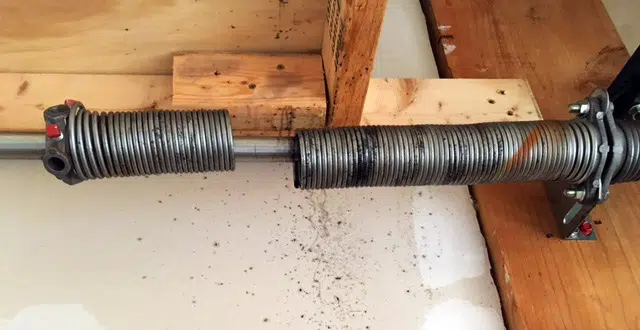
If you have ever pressed the garage door button on a cold Wisconsin morning and heard nothing but a groan or worse, complete silence, there is a good chance a broken spring is the culprit. It is one of the most common garage door problems homeowners in Sussex, WI face, especially after the brutal freeze-thaw cycles that hit Waukesha County every year.
Here is the direct answer: a professional garage door technician can complete a garage door spring replacement in 1 to 3 hours in most cases. But that timeline depends on several factors, including the type of spring, the age of the door, and whether other hardware needs attention at the same time.
How Much Time Does a Garage Door Spring Repair Take?
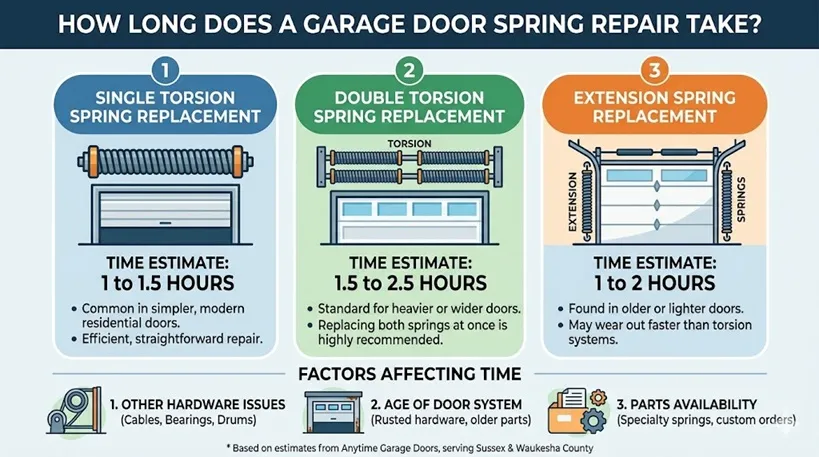
Most homeowners can expect the following repair timeframes when a licensed technician handles the job:
- Single torsion spring replacement: 1 to 1.5 hours
- Double torsion spring replacement: 1.5 to 2.5 hours
- Extension spring replacement: 1 to 2 hours
- Same-day or emergency repair: Add 30 to 60 minutes for scheduling and travel, which is common during peak winter months in Sussex and the surrounding Waukesha County area
These timeframes are based on straightforward repairs where no major secondary issues are found. If the cables, drums, or bearings are also worn, a thorough technician will address those as well, which can add time to the visit but also prevents a follow-up service call down the road.
The bottom line: for most Sussex, WI homeowners, a broken garage door spring is a same-day fix when handled by a qualified local technician.
Not sure what caused the spring to fail in the first place? Check out Broken Garage Door Spring: Signs, Causes, and Repair Options for a deeper look at what leads to spring failure and what repair options are available.
Torsion Spring vs. Extension Spring: Why It Matters for Repair Time
Not all garage door springs are the same, and the type of spring on a door plays a big role in how long the repair takes.
- Torsion springs: Are mounted horizontally above the garage door on a metal shaft. Think of them like a tightly wound rubber band that stores energy as the door closes and releases that energy to lift the door back up. These are the most common types found in newer homes across Sussex and the Menomonee Falls area. They are more durable, typically rated for 15,000 to 20,000 open-close cycles, and are considered the industry standard for modern residential garage doors.
- Extension springs: Run along the upper horizontal tracks on both sides of the door. They stretch and contract as the door moves. These are more common in older homes and lighter doors. They are simpler to work with but tend to wear out faster than torsion springs.
Identifying the spring type is the very first thing an experienced technician does before estimating repair time or recommending parts. Knowing this upfront helps avoid surprises once the job gets started.
Wondering what happens when either spring type fails unexpectedly? Read Can a Broken Garage Door Spring Cause Safety Risks to understand the dangers and why acting fast matters.
5 Factors That Can Make a Garage Door Spring Repair Take Longer
Several variables can stretch a repair beyond the standard 1 to 3-hour window. Here are the five most common ones:
- Single vs. Double Spring System
Doors with two torsion springs naturally take longer to service than single-spring setups. However, replacing both springs during the same visit is always the smarter move, and that point is covered in more detail below.
- Spring Size and Weight Capacity
Heavier garage doors, which are common in the attached two and three-car garages found throughout Sussex and Pewaukee neighborhoods, require heavier-duty springs. These are not always stocked on every service truck, which can add time if parts need to be sourced.
- Condition of Other Hardware
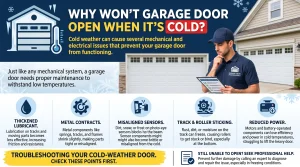
A responsible technician does not just look at the spring. Cables, drums, rollers, and end bearings all work together as part of the counterbalance system. If any of these components show significant wear, addressing them during the same visit is the right call, even if it adds time to the job.
- Age of the Garage Door System
Older doors, especially those 15 to 20 years or more, often have rusted or corroded hardware that slows disassembly. Homes in older Sussex neighborhoods with original garage door systems may run into this situation.
- Parts Availability and Emergency Scheduling
Most local technicians serving Sussex and Waukesha County carry standard springs on their trucks, making same-day repairs very common. However, specialty springs for oversized or custom doors may require ordering, which can push the timeline to the next business day.
Curious about what actually happens the moment a spring gives out? What Happens if a Broken Garage Door Spring Snaps covers exactly what to expect and why it should never be ignored.
Warning Signs a Garage Door Spring Is About to Break
Garage door springs rarely fail without giving some warning first. Catching these signs early can prevent being stuck with a door that will not open on a below-zero Wisconsin morning.
Watch for these red flags:
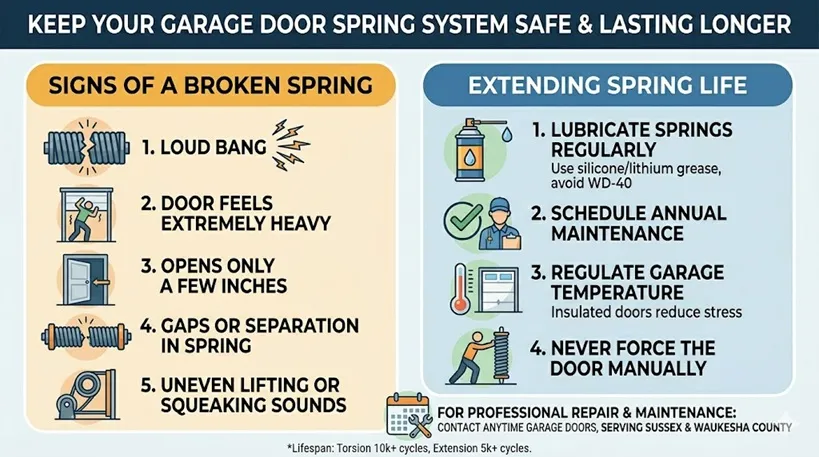
- A loud bang from the garage that sounds almost like a gunshot (this is the most classic sign of a spring that has already snapped)
- The door feels extremely heavy when lifted manually
- The door opens only a few inches and then stops
- A visible gap or separation in the torsion spring coil above the door
- Uneven lifting, where one side of the door rises faster than the other
- Squeaking, creaking, or grinding sounds that were not there before
- The door moves noticeably slower than usual, even with a working opener
A note for Sussex, WI homeowners specifically: Wisconsin winters are hard on garage door springs. The extreme cold, combined with rapid temperature swings from January through March, causes metal fatigue to accelerate. Having springs inspected every fall before the cold sets in is one of the best things a homeowner can do to stay ahead of a sudden failure.
What to Do Before the Technician Arrives
There is not much a homeowner needs to do before a garage door spring repair, but a few simple steps can help the job go smoothly and safely.
- Do not force the door open: Trying to manually yank a door with a broken spring can damage the opener motor, pull the cables off the drums, or cause the door to fall.
- Disconnect the garage door opener: Pull the red emergency release cord hanging from the opener rail. This prevents the opener from being accidentally activated during the repair.
- Clear the work area: Move cars, bikes, and storage items away from the garage door to give the technician full access.
- Know the door’s age and brand if possible: This information helps the technician arrive prepared with the right parts.
- Note any other unusual sounds or behaviors: The more detail provided, the faster a technician can diagnose the full picture.
Having this information ready can shave 15 to 20 minutes off the service call and help the technician get straight to work.
Should One Spring or Both Springs Be Replaced?
The industry-standard recommendation from experienced garage door professionals is clear: replace both springs at the same time, even if only one has broken.
Here is why that advice makes sense. Torsion springs are installed as a pair and put under the same level of stress every single day. They age at the same rate. If one spring has reached the end of its life, the other is not far behind.
Think of it like a pair of worn-out tires. Replacing just one might get the car moving again, but the remaining tire is already compromised and likely to fail soon after.
Replacing both springs during a single visit costs more upfront, but it avoids a second service call, a second labor charge, and another morning of being stuck in the driveway. Any reputable garage door company in the Sussex area will make this recommendation, and for good reason.
How Long Do Garage Door Springs Last and How to Make Them Last Longer
Understanding spring lifespan helps homeowners plan ahead instead of being caught off guard.
Standard spring lifespan:
- Basic torsion springs: rated for approximately 10,000 cycles
- High-cycle torsion springs: rated for 25,000 to 100,000 cycles
One cycle equals one complete open and close of the garage door. A typical household that opens and closes the garage door 3 to 5 times per day will burn through a standard spring in roughly 5 to 7 years. High-cycle springs can last 10 to 15 years or more.
Tips to extend spring life:
- Lubricate springs every 3 to 6 months: Use a silicone-based or white lithium grease spray. Avoid WD-40, which attracts dirt and can actually accelerate wear over time.
- Schedule an annual maintenance inspection: A technician can spot tension issues, minor corrosion, or worn hardware before they become bigger problems.
- Regulate garage temperature where possible: Insulated garage doors and weather sealing help reduce the dramatic temperature swings that put stress on metal components during Wisconsin winters.
- Never force the door manually: The spring is designed to do the heavy lifting. Forcing the door strains the spring beyond its intended load.
These small habits add years to the life of a garage door spring and help avoid unexpected failures at the worst possible times.
DIY vs. Professional Repair: Why This Is Not a Weekend Project
It is fair to ask whether a broken garage door spring is something a handy homeowner can tackle. The honest answer is that it is not worth the risk.
Torsion springs are wound under extreme mechanical tension, sometimes several hundred pounds of force. When mishandled during installation or removal, that stored energy releases suddenly and violently. Injuries from improper spring handling range from broken fingers and lacerations to far more serious outcomes. This is not an exaggeration, and it is not a scare tactic. It is simply the reality of working with high-tension components without proper training and tools.
Beyond the safety risk, the cost savings are not as significant as they might appear. Sourcing the correct spring, renting or purchasing the right winding bars, and factoring in the time and risk involved rarely adds up to meaningful savings compared to hiring a licensed local technician.
For Sussex, WI homeowners, calling a trusted local garage door professional is almost always the smarter, safer, and more cost-effective choice.
What Happens During a Professional Garage Door Spring Repair
Knowing what to expect during a service visit helps homeowners feel confident they are getting quality work. Here is a step-by-step look at what a thorough technician will do:
- Full system inspection to assess not just the spring but the cables, drums, rollers, and opener
- Spring identification to confirm the correct type, size, and tension rating for the door
- Safe tension release from the broken or worn spring using proper winding bars
- Spring removal and replacement with correctly rated new spring or springs
- Re-tensioning and door balancing to ensure the door opens and closes smoothly and evenly
- Manual operation test to verify that the door can be lifted safely by hand without excessive weight
- Opener reconnection and test to confirm the automatic opener functions properly with the new spring
- Full lubrication of all moving parts, including hinges, rollers, and tracks
- Homeowner walkthrough covering what was done, the condition of the overall system, and maintenance recommendations
A thorough technician does not just swap the spring and leave. The job is not done until the entire system is balanced, safe, and performing the way it should.
How to Find a Trusted Garage Door Spring Repair Company in Sussex, WI
Not every garage door company delivers the same level of service. Here is what to look for when choosing a repair company in the Sussex and Waukesha County area.
Green flags:
- Licensed and insured with verifiable local credentials
- Stocks common spring sizes on their service trucks for same-day repairs
- Offers a written warranty on both parts and labor
- Has strong local reviews from homeowners in Sussex, Menomonee Falls, Germantown, and Pewaukee
- Recommends replacing both springs and explains why, rather than just upselling
Red flags:
- Unusually low quotes that seem too good to be true
- No physical local address or verifiable business history
- Pressure to approve additional repairs on the spot without explanation
- Vague or verbal-only quotes with no written estimate
Local Sussex and Waukesha County companies have a reputation to protect in their own community. That accountability often translates to better service, faster response times, and technicians who treat every job like it matters because in a tight-knit community like Sussex, it does.
Do Not Wait Until It Is Too Late
A broken garage door spring is one of those problems that feels urgent because it is. For most homeowners in Sussex, WI, a qualified local technician can have the door working again within 1 to 3 hours using the right parts and the right process.
The key is not waiting until a full failure happens. Catching the warning signs early, staying on top of annual maintenance, and lubricating the springs regularly are simple habits that add years to the system and prevent those dreaded early morning surprises.
When a spring does finally give out, do not put off garage door spring repair. Trust the job to a licensed local professional who knows the area, carries the right parts, and stands behind their work. The garage door is one of the hardest-working parts of any Sussex home. It deserves to be treated that way.
Trusted Garage Door Spring Repair in Sussex, WI
That is exactly what Anytime Garage Doors delivers to homeowners across Sussex, WI, and the greater Waukesha County area. With a reputation built on honest assessments, quality parts, and workmanship that lasts, we has been the trusted name local families turn to when their garage door needs attention. Same-day service, experienced technicians, and a commitment to getting the job done right the first time make them the go-to choice for garage door spring repair in the area. Do not let a broken spring disrupt the day. Contact us today or give us a call, and let us get your garage door back in action fast.