With our expert guide, you can learn how to change garage door torsion springs safely. Avoid costly mistakes and fix your garage like a pro!
Garage door torsion springs help lift and lower your door easily by balancing its weight. When these springs break, your garage door can become hard to move or stop working. Learning how to change garage door torsion springs can save money, but it’s risky due to the high tension involved.
This guide gives easy steps to stay safe. Shut off the opener and keep the door locked in place. Use winding bars to release tension slowly. Replace the broken spring, tighten the new one, check the balance, and test the door. If unsure, call a garage door repair service for help.
How Garage Door Torsion Springs Work
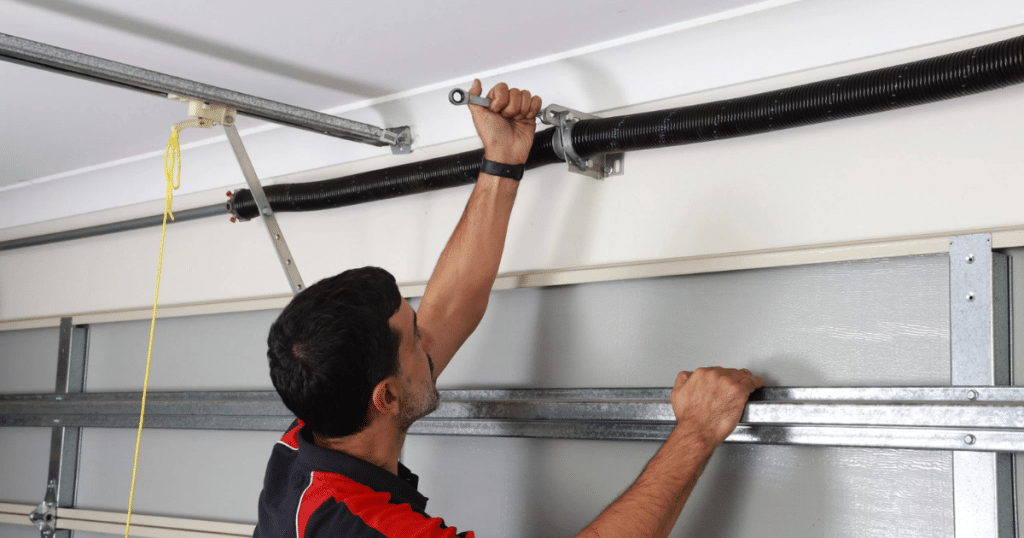
Before you learn how to change garage door torsion springs, it’s important to know what they do. These springs sit above your garage door and use twisting force to lift and lower the door safely, helping it move smoothly every time.
These springs support the garage door’s weight, making it smoother to lift or lower. If a spring breaks, the door might feel too heavy, get stuck, or stop working right.
These springs come in many sizes and are made to handle different weights. Choosing the right spring is very important. Using the wrong part can harm your garage door or make it unsafe.
Signs Your Torsion Springs Need Replacement
Torsion springs help lift your garage door with ease. But over time, they wear out. Watch for these clear signs that it’s time for a replacement:
1. The Door Feels Heavier Than Usual
If your garage door feels much heavier than before, the torsion springs might be worn out or broken. These springs help lift the door. When they stop working, the door becomes hard to open, even when using the garage door opener.
2. You Hear Loud Snapping or Popping Noises
A loud pop or snap from the garage often means a spring has broken. Torsion springs are tightly wound, and when they break, they release a strong force. This sound usually means the spring needs to be replaced right away.
3. The Door Doesn’t Stay Open or Closes Too Quickly
If the door won’t stay open or drops too fast, the spring may not hold the weight anymore. This can be dangerous and should be fixed quickly. A broken spring can cause injury or damage if the door slams shut.
4. Gaps or breaks you can see in the spring coils
Look at the spring above your garage door. The spring is probably broken if there’s a gap or break in the coil. This means it can’t support the door and needs to be replaced for safe use.
Garage Door Safety Tips Before You Start Repairs
Since torsion springs are under extreme tension, improper handling can lead to serious injury. Follow these safety measures:
1. Wear Protective Gear
Always wear safety glasses and gloves before fixing garage door springs. The springs can break suddenly and hurt you. Glasses protect your eyes from flying parts, and gloves protect your hands from sharp edges or small cuts while working.
2. Disconnect the Opener
Before doing anything, unplug the garage door opener. This will prevent the door from opening or closing by mistake while you’re working. Turning off the power keeps you safe and ensures nothing moves when it’s not supposed to.
3. Use the Right Tools
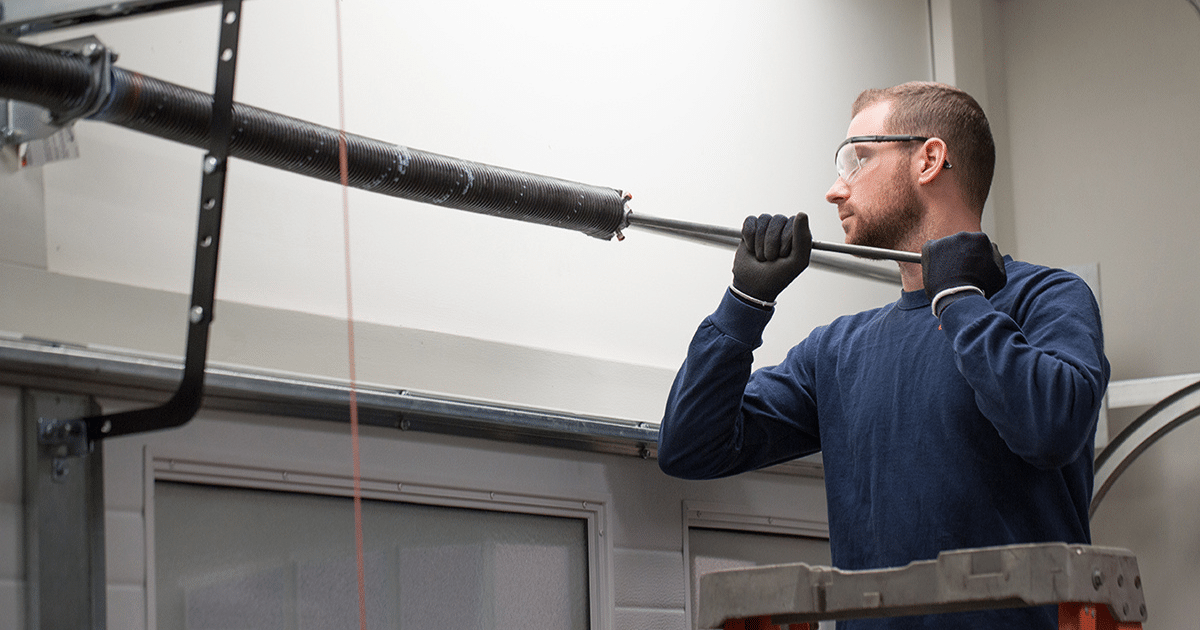
Make sure you have the right tools before starting. Use winding bars to loosen the springs, a socket wrench to remove bolts, and vice grips to keep the door in place. These tools make the job safer and easier to do right.
4. Work with a Partner
Never try to fix garage door springs by yourself. It’s always best to hire a garage door repair pro for safety. But if you choose to do it, ask someone to help hold tools, steady the ladder, and assist if something goes wrong.
What You Need to Replace Garage Door Torsion Springs
To change torsion springs, first make sure you have the proper tools. This keeps the job safe and makes the process go smoothly. Here’s what you need:
- Replacement torsion springs: Pick the correct size and strength for your specific garage door.
- Winding bars: Use these rods to wind or unwind the garage door springs safely.
- Adjustable wrench: Handy for loosening and tightening nuts during the spring change.
- Socket set: Needed to remove and install bolts holding the spring parts.
- Vice grips or locking pliers: Hold the torsion tube in place while you work.
- Ladder: Choose a steady ladder that allows safe access to the spring assembly.
- C-clamps: Secure the door to the track to stop it from moving during the job.
How to Change Garage Door Torsion Springs
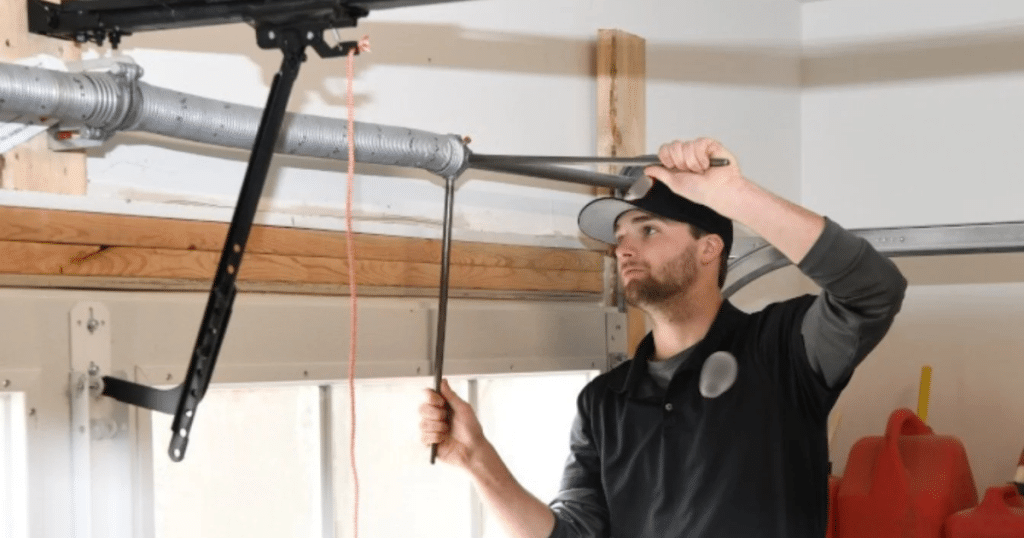
Changing garage door torsion springs takes time and care. A mistake can lead to danger. Follow this easy guide to do it safely.
Step 1: Release the Tension from the Old Springs
- Lock the garage door in place with C-clamps so it doesn’t move.
- Look for the winding cone at the spring’s end.
- Slide the winding bar into a hole on the winding cone.
- Hold the bar tight and slowly turn it to release tension.
- Repeat until the spring is fully loose.
Step 2: Take Out the Old Springs
- Use a socket wrench to loosen the screws on the spring.
- Gently pull the old spring off the metal rod.
- Watch out for sharp edges or worn parts.
Step 3: Put in the New Torsion Springs
- Slide the new spring onto the bar in the same spot.
- Secure the spring by tightening the screws.
- Use the winding bar to turn the spring 30 to 35 times.
- Lift the door halfway to check the balance.
- The door should stay in place if it’s balanced.
Step 4: Reconnect and Test the Door
- Attach the lift cables and make sure they are tight.
- Take off the C-clamps holding the door.
- Try opening and closing the door a few times to see if it works.
- Make sure it moves smoothly and stays even.
When to Call a Pro for Garage Door Torsion Spring Repair
While learning how to change garage door torsion springs can be empowering, some situations require professional help:
- If you’re uncomfortable working under tension.
- If the door still doesn’t function correctly after replacement.
- If you lack the necessary tools or experience.
How to Make Your Garage Door Springs Last Longer
Garage door springs work hard daily, so giving them proper care helps them last longer. Follow these simple tips to avoid costly and frequent replacements.
1. Lubricate the Springs Regularly
Use a silicone-based garage door spray on the springs every six months. It keeps the springs working smoothly, avoids rust, and cuts down on damage.
2. Inspect for Rust or Wear
Check your springs every few months. Look for rust, stretched coils, or open gaps. If you see any damage, it may be time for a garage door repair or replacement.
3. Keep the Door Balanced
Pull the opener release and lift the door halfway. If it stays in place, it’s balanced. If not, it needs adjustment to stop extra strain on the springs.
Frequently Asked Questions
Conclusion
Fixing a broken garage door spring is a tough job. Because of the tension it holds, it’s one of the most dangerous parts to repair. This guide helps you understand how to change garage door torsion springs without skipping safety. It’s all about taking smart, steady steps.
The spring could be the issue if your garage door feels heavy or stops halfway. Following the steps in this guide helps prevent damage and saves money. But if you feel unsure, it’s best to stop and contact a trusted garage door repair service to avoid injury.
Anytime Garage Doors cares about your safety and your door’s performance. Whether you’re ready to DIY or need a pro, we’re here to help. For expert help and fast service, call us today at (262) 246-3680. We’ll keep your door running right.
End Note
If you need trusted garage door service, Anytime Garage Doors is ready to help. We offer commercial overhead doors, Amarr, and LiftMaster products, plus expert garage door repair in Hartland, WI. We also show you how to change garage door torsion springs safely and correctly.
If you want to learn more about our services, visit our company background and meet the team who makes it all possible. You can design your door to fit your home or business style. Our blog offers valuable tips; you can see our shop on Google Maps.
If you like updates, tips, and helpful ideas, follow us on Facebook, Instagram, YouTube, and LinkedIn. To begin, visit our contact page. We’re here with fast, friendly support to keep your garage door working.
Anytime Garage Doors
N70W25156 Indian Grass Ln # B, Sussex, WI 53089, United States
+12622463680