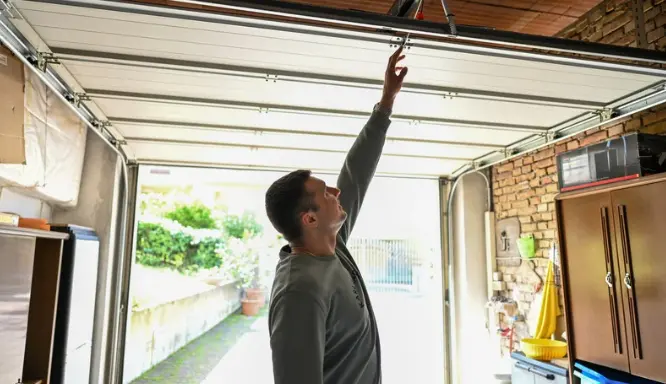
A stuck garage door can disrupt daily routines, trap a vehicle, and create safety concerns quickly in Sussex, WI. Forcing the door may feel like the quickest solution, but hidden mechanical problems can turn a simple attempt into a serious safety risk.
Clear warning signs help determine whether a quick check is safe or whether emergency garage door repair is the smarter next step. This guide explains the most important risk factors, what to watch for, and when to call a professional, helping protect your door system and avoid more significant damage.
When a Garage Door Gets Stuck, Should You Touch It or Stop and Call?
A stuck door is less about strength and more about risk, because the system can fail suddenly when load-bearing parts are compromised. A safer approach starts by assessing what the door is signaling before making any additional attempts that could strain or create a safety hazard.
Clear reasons a stop-and-assess approach is the smarter first move
- Unstable movement can lead to a sudden drop, increasing the risk of serious injury near the opening.
- A door that twists or lifts unevenly can pull rollers out of the track, raising the risk of accidents and making alignment harder to restore.
- A heavy-lift feel often points to spring tension loss, which can overload the opener and accelerate premature wear on moving parts.
- Repeated button presses can turn a minor bind into bent track sections, damaged hardware, or a bigger emergency garage door repair situation.
To understand why forcing a stuck door can create bigger damage and higher risk, read our blog on Can Forcing a Stuck Garage Door Make the Problem Worse?, which explains how professionals recognize stop-sign symptoms and confirm the safest next step.
Decision Factors That Tell You to Stop or Call for Help
Certain warning signs appear before a garage door becomes dangerous to touch or operate. Evaluating these factors in the order below helps identify when the risk level is rising and when stopping early prevents injury, equipment damage, or a larger emergency garage door repair situation.
Immediate Safety Risk Around the Garage Door
Safety checks should occur before any button press or manual effort, as a stuck door can shift, twist, or drop without warning. Serious injury becomes more likely when the door hangs partially open, the lift system looks unstable, or children, pets, and vehicles remain close to the travel path.
Stop and back away when any of the signs below show up
- Tilted sections or a bottom edge that sits unevenly on the floor
- A sharp snap or bang followed by a door that will not open normally
- Loose cable strands near the track or a roller that looks out of position
- Panels that bow or flex as the door tries to move
- A need to stand under the door to enter or exit the garage
What makes this a professional-level issue
- Opener lights or clicking can still appear even when the door is unsafe to move under load.
- Uneven lifting can twist the door fast and pull the hardware out of alignment.
- Stored force in lift components can unexpectedly release, creating a safety hazard.
Creating distance and avoiding repeated attempts keeps conditions stable until expert help can evaluate the system safely. Clopay’s garage door safety checklist supports the same approach by stressing safe clearance around moving doors and caution around spring-related failures and other high-risk conditions.
Inconsistent or Abnormal Door Movement
Movement patterns often reveal more than noise alone because travel changes usually point to resistance in the path or a lift component that is starting to fail. Jerking, stopping, reversing, or uneven travel can also cause the opener to pause for safety, but repeated attempts can add strain and lead to premature wear.
Common movement patterns that signal a stop point
- The door rises a few inches, then stops hard at the same location
- One side lifts first, and the door twists as it travels
- Closing run reverses near the floor with no visible obstruction
- Response changes across attempts, even when using the same control
What makes this a professional-level issue
- Door resistance can imitate an opener fault, so the diagnosis must evaluate both the opener and the door system.
- Uneven travel can push rollers against the track edges, quickly deforming the hardware.
- Repeat reversals often indicate load problems that worsen with each cycle.
One observation attempt can yield useful clues, but repeated cycles often add strain and increase safety risks. Leaving the door in its current state prevents unnecessary hardware stress and avoids turning a minor bind into a larger repair need.
Door Weight and Balance Feel During Controlled Checks
A sudden change in door weight is one of the clearest danger signals, as the counterbalance may no longer be functioning correctly. Door springs are designed to offset the weight of the door, so a door that feels unusually heavy or will not stay in place often indicates a loss of lift support and a higher risk of uncontrolled movement.
Safe, low-risk clues that often show up
- The door’s weight feels heavier than normal compared to recent use
- The lifted door will not hold its position and starts drifting downward
- Opener strain increases even though power appears normal
What makes this a professional-level issue
- A lost counterbalance can overload the garage door opener and damage internal drive parts.
- Heavy lifting increases the chance of slips, falls, or pinched fingers during manual handling.
- An unstable balance can shift the load toward one side of the door, causing track binding.
A heavy feel often points to a spring problem, including a broken garage door spring that suddenly removes lifting support. Keeping the door undisturbed reduces the chance of a sudden drop while a technician confirms the source of the imbalance.
Visible Lift-System Damage on Springs, Cables, or Tracks
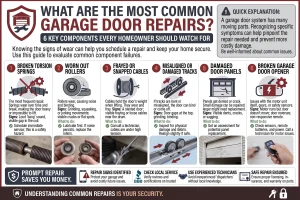
Visible damage should override curiosity because springs store energy, and load-bearing parts can fail without warning. A careful visual check can reveal a broken garage door spring, slack garage door cables, or a roller that is no longer riding correctly, each of which can quickly raise the safety risk.
Safe, low-risk clues that often show up
- A clear separation in a coil near the end of the spring
- A roller sitting outside the track or pressed hard against the track edge
- Cable slack near the drum area or loose strands near the track
What makes this a professional-level issue
- Spring tension can release with force and cause serious injury.
- Cable slack can twist the door and trigger a sudden drop on the next movement.
- Track damage can worsen quickly once rollers begin riding incorrectly.
Visible lift-system damage often signals a condition that can escalate during the next open or close cycle. The International Door Association’s care and maintenance guidance recommends monthly visual inspections of springs, cables, and rollers to help confirm when visible damage warrants a professional evaluation.
Door Type and System Load Level
Door type affects risk because heavier systems carry higher loads and store more force during normal travel. A residential garage door often uses lighter hardware and shorter duty cycles, while a commercial garage door may use heavier sections and stronger lift components that react more quickly when binding or imbalance occurs.
Safe, low-risk clues that often show up
- Large, insulated, or reinforced panels that add noticeable door weight
- Wide openings that flex more and require stronger lift support
- High-cycle use patterns that speed up signs of wear in moving parts
What makes this a professional-level issue
- Higher-load systems can twist faster when one side loses lift support.
- Larger setups are more prone to pulling tracks out of alignment during a bind.
- Stronger spring systems require correct control methods and the right tools to manage force safely.
Door type should raise caution when symptoms appear because a heavier system can become unstable quickly under resistance. Service for heavier-duty setups often aligns with commercial overhead doors when the door design, load level, and operating demands require professional evaluation and safe verification.
Risk of Escalating Damage If the Door Is Forced
Extra force can damage multiple parts at once because a stuck system usually fails at the point of highest resistance. Track bends, hinge stress, opener overload, and panel cracks can result from a single forced attempt, and repeated forcing increases the likelihood that the door will need major repairs or even a new garage door.
Safe, low-risk clues that often show up
- Tracks show fresh scrape marks, bending, or new gaps at joints
- Rollers or hinges start squealing, grinding, or dragging during movement
- The opener rail appears to flex, shake, or strain during a start attempt
What makes this a professional-level issue
- Minor resistance can hide a bigger load problem, so forcing can multiply failures.
- Misalignment can spread across the opening and worsen with every cycle.
- Hardware stress can contribute to sudden drops and increase the risk of accidents.
Forcing rarely restores safe operation because the underlying bind remains and keeps stressing the same weak points. Leaving the door in place helps protect alignment and reduces the odds that the replacement process becomes the next step.
Urgent Security or Access Concerns
Urgency rises when the garage cannot be properly secured, or a vehicle is trapped inside, especially when the weather is moving in around Sussex, WI. Security concerns increase when the door cannot close, and repeated attempts to force operation can raise safety risks and cause additional damage.
Safe, low-risk clues that often show up
- The door will not close fully, leaving the opening exposed
- Vehicle remains trapped, and normal access is blocked
- Wind-driven rain or snow threatens items stored near the opening
What makes this a professional-level issue
- An unsecured opening increases the risk of break-ins and can expose the garage to water damage.
- A stuck door can shift unexpectedly during manual handling, which raises safety concerns.
- Repeated attempts can worsen misalignment and make the repair more complex.
When the door will not secure, or access is blocked, a search for emergency garage door repair near me is a common next step, as rapid stabilization helps protect the opening. An emergency garage door repair can restore safe access and secure closure without the need for repeated trial-and-error attempts.
What to Check Before Calling for Emergency Garage Door Repair
Safe checks should confirm basic conditions without forcing movement or touching tension-loaded parts. Visual confirmation can reduce guesswork while maintaining the door system’s stability.
What you can confirm visually without forcing movement
- Clear debris and stored items away from track paths
- Confirm rollers sit inside the tracks on both sides
- Check garage door cables for slack or fraying near the bottom corners
- Inspect hinge lines for gaps, cracks, or bent metal
- Confirm the opener rail appears straight and securely mounted
What to avoid even if the door moves a little
- Avoid lifting by hand when the door feels heavy or unbalanced
- Avoid pushing the door while the opener runs
- Avoid removing brackets connected to spring systems
- Avoid touching winding cones or spring assembly components
To understand why limiting checks to a visual scan and avoiding hands-on force helps prevent added strain and misalignment, read our blog on What’s the Safest Way to Troubleshoot a Stuck Garage Door?, which explains the safest stop points professionals use before damage or safety risks increase.
What to Expect During Emergency Garage Door Repair
Emergency garage door repair starts with safety and stabilization so the door can be evaluated without creating added risk. A technician confirms whether movement is safe, then isolates the cause through lift, alignment, and opener checks.
What technicians check first
- Track alignment and roller seating across the opening
- Cable condition and drum wrap on both sides
- Spring condition, including signs of a broken spring
- Opener travel limits and safety reversal behavior
- Door balance and smooth travel through the full range
How is the door stabilized before any adjustments
- Securing the door to prevent uncontrolled movement
- Correcting uneven lift conditions along the side of the door
- Resetting rollers into safe travel alignment when an off-track condition exists
How safety reversal and travel are verified
- Confirming smooth travel and stable stopping points
- Confirming reliable reversal behavior under normal use
- Confirming the door does not bind, drag, or twist during movement
Emergency calls follow a clear safety sequence, and our blog What Happens During an Emergency Garage Door Repair Call? explains how technicians stabilize the door, correct the fault, and confirm safe operation.
When to Stop Forcing a Stuck Garage Door and Call for Emergency Repair
A stuck garage door often signals a problem with the load, alignment, or lift support that can escalate quickly. Emergency garage door repair is the safer next step when heavy lifting, uneven travel, cable slack, or visible damage shows up, and regular upkeep helps reduce repeat breakdowns over time.
Anytime Garage Doors supports Sussex, WI with garage door services that restore safe movement, secure closure, and reliable daily access when a door will not operate correctly. Contact us or give us a call today so we can schedule fast help and restore safe operation.