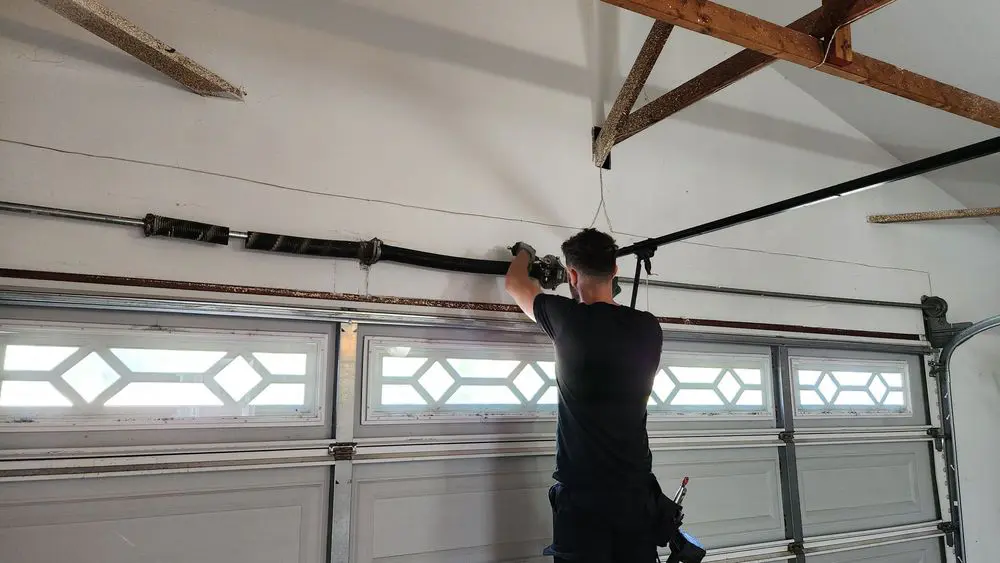
Quality Service Around The Clock.

Broken Garage Door Spring: Signs, Causes, and Repair Options

can-broken-garage-door-spring-cause-safety-risks

Table of Contents

If you’ve ever walked into your garage on a cold Wisconsin morning, hit the button, and watched your garage door struggle to open or not move at all, chances are you already know that sinking feeling. And if you heard a loud bang in the garage last night that sounded like a firecracker going off, that noise almost certainly came from a broken garage door spring.

This is one of the most common garage door problems homeowners in Sussex, WI deal with, and it happens more often than most people realize. The good news is that once you understand what to look for, what causes it, and what your options are, you can make smart decisions fast.

A broken garage door spring usually causes the door to stop working, makes a loud snapping sound, or causes the door to move unevenly. Springs break due to wear and tear, rust, and lack of maintenance, and garage door spring replacement should always be handled by a licensed professional.

What Does a Garage Door Spring Actually Do?

Before getting into the warning signs, it helps to understand what a garage door spring is doing in the first place.

Most garage doors weigh between 150 and 300 pounds. That is a lot of weight for a small electric motor to handle on its own. The springs are what make the door feel light. They store mechanical energy when the door closes and release that energy when the door opens, essentially doing most of the heavy lifting so the opener motor does not burn out.

There are two main types of garage door springs found in Sussex and surrounding Waukesha County homes:

  • Torsion Springs: Sit horizontally above the garage door opening. They twist and coil to store energy and are the more common type in modern homes. They tend to last longer and are generally considered safer when they do break.
  • Extension Springs: Run along the upper horizontal tracks on both sides of the door. They stretch and contract as the door moves. These are more common in older homes and lighter doors.


Most standard springs are rated for about 10,000 cycles. One cycle equals one full open and one full close. For a household that uses the garage door four times a day, that works out to roughly seven years of use before the spring reaches the end of its lifespan.

Curious about how long the repair actually takes once a spring breaks? Check out this helpful read: How Long Does a Broken Garage Door Spring Take to Fix it covers what to expect from start to finish, so there are no surprises on repair day.

7 Warning Signs You Have a Broken Garage Door Spring
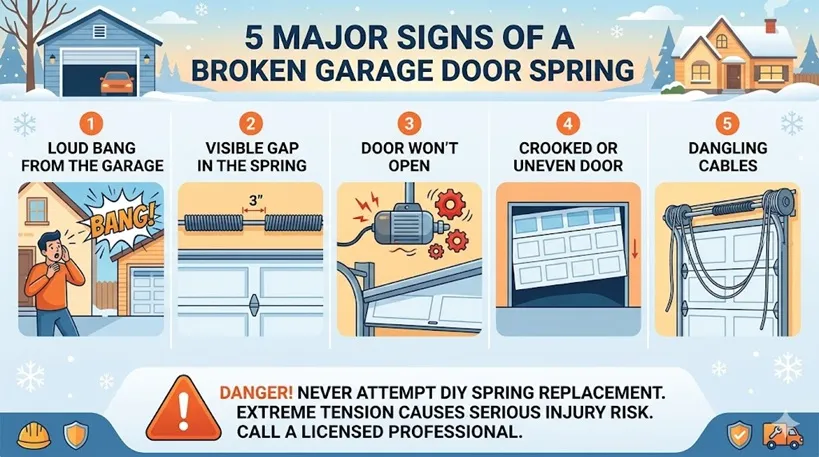
Infographic showing 5 signs of a broken garage door spring: loud bang, spring gap, door won't open, crooked door, and loose cables.

Catching a spring problem early can save a lot of hassle. Here are the most common signs that something is wrong.

1. A Loud Bang Coming From the Garage

This is the most unmistakable sign of a broken torsion spring. When a spring snaps under tension, it makes a sound similar to a gunshot or a firecracker. Many homeowners in Sussex, WI, report hearing it from inside the house and assuming it was something else entirely.

The loud noise happens because torsion springs are under extreme tension at all times. When the metal finally gives way, all that stored energy is released at once. Cold Wisconsin winters make this even more likely, as freezing temperatures cause metal to contract and become brittle over time.

That sudden snap is not just startling; it is a serious safety event. Find out exactly what happens next in Can a Broken Garage Door Spring Cause Safety Risks a must-read for every Sussex homeowner.

2. The Garage Door Will Not Open

Pressing the opener button and getting nothing, or watching the door lift just a few inches before stopping, is a classic sign of a broken spring. The opener may strain, make a grinding sound, and then stop completely. That is actually a built-in safety feature designed to prevent the motor from burning out.

A quick manual test can confirm the issue. Disconnect the opener by pulling the red emergency release cord and try lifting the door by hand. A door with functioning springs should feel relatively light and easy to lift. A door without working springs will feel like it weighs a ton, because without the spring’s help, it basically does.

Want to know exactly what goes on behind the scenes when that spring finally gives way? What Happens if a Broken Garage Door Spring Snaps breaks it all down and explains what Sussex homeowners should do the moment it occurs.

3. The Door Looks Crooked or Opens Unevenly

When a garage door rises on one side but stays low on the other, that uneven movement usually points to a broken extension spring. Since extension springs work in pairs on opposite sides of the door, when one snaps, the other continues pulling its side upward while the broken side stays down.

This is a problem that needs immediate attention. A door that is off-balance puts stress on the cables, the opener, and the tracks. Left alone, it can cause the door to jump off the track entirely, which turns a spring repair into a much bigger job.

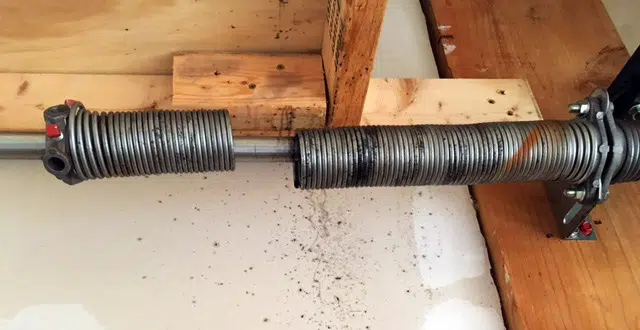
4. A Visible Gap in the Torsion Spring

Torsion springs sit right above the garage door and are easy to spot. When one breaks, a visible gap of two to three inches appears in the coil where the metal snapped apart. From a safe distance, take a look at the spring above the door. A clean, continuous coil is normal. A separated coil with a gap means the spring is broken.

Do not touch the spring or attempt to examine it up close. Even a broken spring can still hold residual tension, and handling it without the proper tools is dangerous.

5. Loose or Dangling Cables

The cables on a garage door work hand in hand with the springs. When a spring breaks, the tension that kept the cables taut disappears, leaving them loose, slack, or hanging down from the drum. Frayed or tangled cables alongside a non-functioning door are a strong indicator of spring failure.

Loose cables are a safety hazard on their own. A snapped cable under tension can whip with serious force. This is another reason why a broken spring situation calls for a professional and not a weekend DIY project.

6. The Door Feels Extremely Heavy to Lift by Hand

As mentioned above, a properly balanced garage door should feel light enough to lift with one hand when the opener is disconnected. If the door feels impossibly heavy, the spring is either broken or has lost its tension to the point where it is no longer doing its job.

Do not try to force the door open if it feels this heavy. Forcing it puts strain on the opener motor, the cables, and the tracks, all of which can create additional damage and higher repair costs.

7. Slow, Jerky, or Shuddering Movement

Not every spring problem announces itself with a loud bang. Sometimes springs wear out gradually, and the door starts to show it through slow, uneven, or shuddering movement. The door might hesitate before moving, shake as it rises, or move noticeably slower than usual.

This kind of behavior is a warning that the spring is nearing the end of its life. Catching it at this stage and calling a technician before it fully breaks is always the smarter and less expensive move.

5 Common Causes of Broken Garage Door Springs
5 Common Causes of Broken Garage Door Springs

Understanding why springs break helps homeowners take better care of their garage door systems.

1. Normal Wear and Tear

No spring lasts forever. Standard springs are rated for around 10,000 cycles, and once they hit that limit, the metal simply fatigues and gives way. For most Sussex, WI households, this happens somewhere between seven and ten years of regular use. High-cycle springs rated for 25,000 to 100,000 cycles are available and worth asking about during a replacement.

2. Rust and Corrosion

Wisconsin winters are tough on metal. The combination of cold temperatures, moisture, road salt in the air, and freeze-thaw cycles creates the perfect environment for rust to develop on garage door springs. Rust increases the friction between coils as the spring moves, which wears the metal down faster and makes it more prone to snapping.

Regular lubrication is one of the most effective ways to fight rust and extend the life of garage door springs, especially in a climate like Sussex, WI.

3. Poor or Skipped Maintenance

Garage door springs are one of those things most homeowners never think about until something goes wrong. Springs that are never lubricated, inspected, or adjusted wear out significantly faster than those that receive regular attention. An annual professional tune-up can add years to a spring’s lifespan and catch problems before they become emergencies.

4. Incorrect Spring Size or Installation

A spring that is not properly matched to the weight of the door will wear out faster than it should. This is a problem that comes up frequently after DIY installations or when a homeowner hires an inexperienced technician. Mismatched springs work harder with every cycle, and that extra stress shortens their life considerably. Garage door professionals who know the Waukesha County area understand the variety of door types and weights common to local homes and can make sure the right spring is used every time.

5. Extreme Temperature Swings

Sussex, WI, experiences some serious seasonal temperature changes. Metal contracts in the cold and expands in the heat. Springs that are already under constant tension do not handle these repeated temperature swings well, especially as they age. Late fall and early spring tend to be peak seasons for spring failures, right when Wisconsin homeowners are dealing with enough weather-related stress already.

Torsion Springs vs. Extension Springs: What Sussex Homeowners Should Know

Knowing which type of spring system a garage door uses helps homeowners have more informed conversations with their repair technician.

Torsion Springs

  • Mounted above the door on a metal shaft
  • Longer lifespan (up to 15,000 to 20,000 cycles with quality springs)
  • Safer when they break, since the shaft contains the spring
  • Better suited for heavier doors, which are common in newer Sussex homes
  • Generally, more expensive upfront but has a better long-term value


Extension Springs

  • Run along the horizontal tracks on either side of the door
  • More common in older homes and lighter single-car garage doors
  • Less expensive but shorter lifespan
  • Can be more dangerous when they snap, since they can recoil and strike nearby objects
  • Should have safety cables threaded through them as a precaution


Homeowners who are unsure which system their garage uses can simply look above and to the sides of the door. The spring above the door is a torsion spring. Springs running along the sides are extension springs.

Can a Broken Garage Door Spring Be Fixed as a DIY Project?
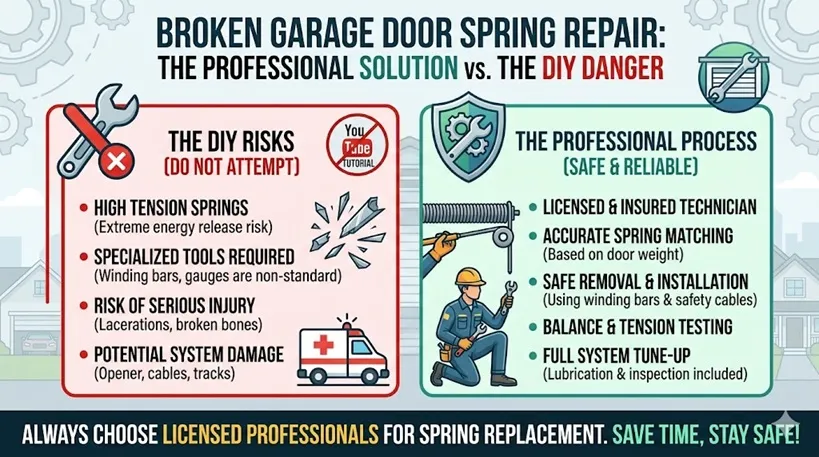
Can a Broken Garage Door Spring Be Fixed as a DIY Project

The short answer is no, and this point deserves some emphasis.

Garage door spring replacement is consistently ranked among the most dangerous home repair tasks a person can attempt without professional training. The springs are under hundreds of pounds of tension at all times. If a spring slips during removal or installation, it can release that energy instantly with enough force to cause broken bones, lacerations, or worse.

The tools required for safe spring replacement are specialized and not something the average homeowner keeps in the garage. Without the right winding bars, tension gauges, and experience, the risk of something going wrong is extremely high.

Garage door professionals who serve Sussex and Waukesha County have responded to situations where homeowners attempted spring repairs on their own and got hurt. It is the kind of repair that looks straightforward from a YouTube video but carries real consequences when something goes wrong.

Leave this one to a licensed, insured professional. The cost of a professional spring replacement is far less than an emergency room visit.

Repair Options for a Broken Garage Door Spring

When a spring breaks, there are a few different repair paths depending on the situation.

Option 1: Standard Spring Replacement

This is the most common repair and the right solution for most situations. A certified technician assesses the spring type, matches the replacement to the door’s weight and size, safely removes the broken spring, installs the new one, and tests the door’s balance and operation. For most Sussex homeowners, a standard spring replacement is a fast, affordable fix that gets the door working properly the same day.

Option 2: Upgrade to High-Cycle Springs

If the current springs have reached the end of their lifespan and the door gets heavy daily use, upgrading to high-cycle springs is a smart investment. These springs are built to last two to three times longer than standard springs and are available in ratings from 25,000 to 100,000 cycles. Busy households with multiple vehicles coming and going throughout the day will see a real difference in how long high-cycle springs last.

Option 3: Full Tune-Up Package With Spring Replacement

Many garage door companies serving Sussex, WI, offer bundled service packages that combine spring replacement with a full system inspection. This typically includes lubrication of all moving parts, cable inspection, roller and hinge checks, track alignment, and a balance test. For homeowners who have not had their door serviced in a while, this is often the best value and ensures the entire system is in good shape going forward.

5 Practical Tips to Prevent Garage Door Spring Problems

Prevention is always better than an emergency repair call. Here are five things Sussex, WI, homeowners can do to extend the life of their garage door springs.

Tip 1: Lubricate the Springs Every Six Months

Use a silicone-based spray or white lithium grease on the spring coils twice a year, ideally once in the fall before winter sets in and once in the spring. Avoid WD-40, which is a cleaner, not a lubricant, and can actually dry out the metal over time. Proper lubrication reduces friction, fights rust, and keeps the springs moving smoothly through every cycle.

Tip 2: Do a Visual Check Once a Month

A quick 60-second look at the springs, cables, and rollers once a month can catch problems early. Look for rust spots, visible gaps in the spring coils, frayed or loose cables, and any parts that look bent or out of place. Early detection means smaller repairs and lower costs.

Tip 3: Test the Door Balance Twice a Year

Disconnect the opener by pulling the emergency release cord. Lift the door manually to about waist height and let go. A properly balanced door will stay in place or move very slightly. If it drops quickly or shoots upward, the spring tension is off, and the system needs adjustment. Schedule this test once in the fall and once in the spring to stay ahead of any issues.

Tip 4: Book an Annual Professional Tune-Up

A yearly visit from a garage door technician familiar with Sussex and Waukesha County homes is one of the best investments a homeowner can make. A professional can spot worn springs before they break, adjust tension as needed, identify cable wear, and make sure every part of the system is working the way it should. Scheduling this before winter is especially smart, given the toll Wisconsin weather takes on garage door components.

Tip 5: Act on Warning Signs Right Away

A slow door, a shuddering movement, a grinding noise, or a door that looks uneven are all signs that something is off. These are not problems to ignore and check on later. Waiting until a worn spring fully breaks means dealing with a door that does not work at all, often at the worst possible moment. Call a technician at the first sign of trouble, and the repair stays manageable.

Choosing a Garage Door Professional in Sussex, WI

Not all garage door companies are the same, and when dealing with something as critical and potentially dangerous as spring replacement, the technician’s experience and qualifications matter.

Here are a few things to look for when choosing a garage door repair company in Sussex or the greater Waukesha County area:

  • Licensing and Insurance: Are non-negotiable. Any technician working on a garage door under tension should be fully insured. If something goes wrong and the company is not insured, the homeowner could be left covering the costs.
  • Local Experience: Counts for a lot. A technician who has worked in Sussex and surrounding communities understands the types of homes in the area, the common door styles, and the specific challenges that Wisconsin’s climate creates for garage door systems.
  • Warranty on Parts and Labor: This is a sign of a company that stands behind its work. Ask whether the replacement springs come with a warranty and whether labor is guaranteed. Reputable companies serving Sussex, WI will have no problem answering these questions.
  • Same-Day and Emergency Service: Availability matters because a broken spring usually means a garage door that does not work at all. Find out whether the company offers prompt scheduling, especially during the busy fall and winter seasons when spring failures spike in Wisconsin.


Questions worth asking before booking:

  • What type of springs do you recommend for my specific door?
  • Are high-cycle springs available?
  • Do you offer a full tune-up along with the replacement?
  • How long has your company been serving the Sussex area?


A Broken Spring Does Not Have to Ruin Your Day in Sussex, WI

A broken garage door spring is a frustrating problem, but it is also a fixable one when handled the right way. The key is recognizing the signs early, understanding what causes springs to fail, and making the right call when it happens.

For homeowners in Sussex, WI, the combination of cold winters, frequent temperature swings, and the wear that comes with daily use means garage door springs deserve regular attention. A little maintenance goes a long way, and knowing when to call a professional can prevent a manageable garage door spring repair from turning into a much bigger and more expensive problem.

If a garage door in Sussex, WI, is showing any of the signs covered in this guide, the right move is to stop using the door and contact a licensed local technician right away. A trusted garage door professional can assess the situation, recommend the right solution, and get that door working safely again, usually the same day.

Your Neighbor in Sussex, WI Has the Answer

That is exactly what Anytime Garage Doors delivers to homeowners across Sussex, WI, and the greater Waukesha County area. With a reputation built on honest service, fast response times, and skilled technicians who know garage door systems inside and out, we have become the go-to choice for spring replacements, tune-ups, and everything in between. Rain, snow, or freezing Wisconsin temperatures, our team shows up ready to get the job done right the first time. Do not let a broken spring slow down the day. Contact us today or give us a call and get a fast, reliable repair from a team Sussex homeowners trust.
Frequently Asked Questions

How do I know if my garage door spring is broken?

Listen for a loud bang, watch for a door that won’t open, or look for a visible gap in the spring coil above the door. Any of these signs means it’s time to call a professional. For a deeper look at how spring replacement works, This Old House is a great resource worth checking out.

No. It puts dangerous strain on the opener, cables, and tracks. Keep the door closed and call a technician before using it again. Family Handyman has a solid breakdown of what happens to garage door components when they are pushed beyond their limits.

Standard springs last around 10,000 cycles, roughly seven to ten years with daily use. High-cycle springs rated for 25,000 to 100,000 cycles are available for households with heavier use.

Cold temperatures make metal brittle, and Wisconsin’s freeze-thaw cycles accelerate wear. Late fall and early winter are peak seasons for spring failures in Sussex, WI.

It must be fully replaced. A broken spring cannot be repaired, and a proper replacement needs to be matched to the exact weight and size of the door.

Yes, always. Both springs wear at the same rate, so if one breaks, the other is close behind. Replacing both at once saves on labor and prevents a second breakdown soon after.

Torsion springs mount above the door and last longer. Extension springs run along the sides and are common in older homes. Torsion springs are generally safer and more durable.

Spring replacement is one of the more affordable garage door repairs. The final cost depends on the spring type and the scope of work. Contact a local technician for an accurate quote.

Lubricate springs every six months, do monthly visual checks, test door balance twice a year, and schedule an annual professional tune-up before Wisconsin winters hit.

Springs carry hundreds of pounds of tension. Without proper tools and training, a slip during removal or installation can cause serious injury. Always leave this repair to a licensed professional.

If you’ve ever walked into your garage on a cold Wisconsin morning, hit the button, and watched your garage door struggle to open or not move at all, chances are you already know that sinking feeling. And if you heard a loud bang in the garage last night that sounded like a firecracker going off, that noise almost certainly came from a broken garage door spring.

This is one of the most common garage door problems homeowners in Sussex, WI deal with, and it happens more often than most people realize. The good news is that once you understand what to look for, what causes it, and what your options are, you can make smart decisions fast.

A broken garage door spring usually causes the door to stop working, makes a loud snapping sound, or causes the door to move unevenly. Springs break due to wear and tear, rust, and lack of maintenance, and garage door spring replacement should always be handled by a licensed professional.

What Does a Garage Door Spring Actually Do?

Before getting into the warning signs, it helps to understand what a garage door spring is doing in the first place.

Most garage doors weigh between 150 and 300 pounds. That is a lot of weight for a small electric motor to handle on its own. The springs are what make the door feel light. They store mechanical energy when the door closes and release that energy when the door opens, essentially doing most of the heavy lifting so the opener motor does not burn out.

There are two main types of garage door springs found in Sussex and surrounding Waukesha County homes:

  • Torsion Springs: Sit horizontally above the garage door opening. They twist and coil to store energy and are the more common type in modern homes. They tend to last longer and are generally considered safer when they do break.
  • Extension Springs: Run along the upper horizontal tracks on both sides of the door. They stretch and contract as the door moves. These are more common in older homes and lighter doors.


Most standard springs are rated for about 10,000 cycles. One cycle equals one full open and one full close. For a household that uses the garage door four times a day, that works out to roughly seven years of use before the spring reaches the end of its lifespan.

Curious about how long the repair actually takes once a spring breaks? Check out this helpful read: How Long Does a Broken Garage Door Spring Take to Fix it covers what to expect from start to finish, so there are no surprises on repair day.

7 Warning Signs You Have a Broken Garage Door Spring

Infographic showing 5 signs of a broken garage door spring: loud bang, spring gap, door won't open, crooked door, and loose cables.

Catching a spring problem early can save a lot of hassle. Here are the most common signs that something is wrong.

1. A Loud Bang Coming From the Garage

This is the most unmistakable sign of a broken torsion spring. When a spring snaps under tension, it makes a sound similar to a gunshot or a firecracker. Many homeowners in Sussex, WI, report hearing it from inside the house and assuming it was something else entirely.

The loud noise happens because torsion springs are under extreme tension at all times. When the metal finally gives way, all that stored energy is released at once. Cold Wisconsin winters make this even more likely, as freezing temperatures cause metal to contract and become brittle over time.

That sudden snap is not just startling; it is a serious safety event. Find out exactly what happens next in Can a Broken Garage Door Spring Cause Safety Risks a must-read for every Sussex homeowner.

2. The Garage Door Will Not Open

Pressing the opener button and getting nothing, or watching the door lift just a few inches before stopping, is a classic sign of a broken spring. The opener may strain, make a grinding sound, and then stop completely. That is actually a built-in safety feature designed to prevent the motor from burning out.

A quick manual test can confirm the issue. Disconnect the opener by pulling the red emergency release cord and try lifting the door by hand. A door with functioning springs should feel relatively light and easy to lift. A door without working springs will feel like it weighs a ton, because without the spring’s help, it basically does.

Want to know exactly what goes on behind the scenes when that spring finally gives way? What Happens if a Broken Garage Door Spring Snaps breaks it all down and explains what Sussex homeowners should do the moment it occurs.

3. The Door Looks Crooked or Opens Unevenly

When a garage door rises on one side but stays low on the other, that uneven movement usually points to a broken extension spring. Since extension springs work in pairs on opposite sides of the door, when one snaps, the other continues pulling its side upward while the broken side stays down.

This is a problem that needs immediate attention. A door that is off-balance puts stress on the cables, the opener, and the tracks. Left alone, it can cause the door to jump off the track entirely, which turns a spring repair into a much bigger job.

4. A Visible Gap in the Torsion Spring

Torsion springs sit right above the garage door and are easy to spot. When one breaks, a visible gap of two to three inches appears in the coil where the metal snapped apart. From a safe distance, take a look at the spring above the door. A clean, continuous coil is normal. A separated coil with a gap means the spring is broken.

Do not touch the spring or attempt to examine it up close. Even a broken spring can still hold residual tension, and handling it without the proper tools is dangerous.

5. Loose or Dangling Cables

The cables on a garage door work hand in hand with the springs. When a spring breaks, the tension that kept the cables taut disappears, leaving them loose, slack, or hanging down from the drum. Frayed or tangled cables alongside a non-functioning door are a strong indicator of spring failure.

Loose cables are a safety hazard on their own. A snapped cable under tension can whip with serious force. This is another reason why a broken spring situation calls for a professional and not a weekend DIY project.

6. The Door Feels Extremely Heavy to Lift by Hand

As mentioned above, a properly balanced garage door should feel light enough to lift with one hand when the opener is disconnected. If the door feels impossibly heavy, the spring is either broken or has lost its tension to the point where it is no longer doing its job.

Do not try to force the door open if it feels this heavy. Forcing it puts strain on the opener motor, the cables, and the tracks, all of which can create additional damage and higher repair costs.

7. Slow, Jerky, or Shuddering Movement

Not every spring problem announces itself with a loud bang. Sometimes springs wear out gradually, and the door starts to show it through slow, uneven, or shuddering movement. The door might hesitate before moving, shake as it rises, or move noticeably slower than usual.

This kind of behavior is a warning that the spring is nearing the end of its life. Catching it at this stage and calling a technician before it fully breaks is always the smarter and less expensive move.

5 Common Causes of Broken Garage Door Springs

5 Common Causes of Broken Garage Door Springs

Understanding why springs break helps homeowners take better care of their garage door systems.

1. Normal Wear and Tear

No spring lasts forever. Standard springs are rated for around 10,000 cycles, and once they hit that limit, the metal simply fatigues and gives way. For most Sussex, WI households, this happens somewhere between seven and ten years of regular use. High-cycle springs rated for 25,000 to 100,000 cycles are available and worth asking about during a replacement.

2. Rust and Corrosion

Wisconsin winters are tough on metal. The combination of cold temperatures, moisture, road salt in the air, and freeze-thaw cycles creates the perfect environment for rust to develop on garage door springs. Rust increases the friction between coils as the spring moves, which wears the metal down faster and makes it more prone to snapping.

Regular lubrication is one of the most effective ways to fight rust and extend the life of garage door springs, especially in a climate like Sussex, WI.

3. Poor or Skipped Maintenance

Garage door springs are one of those things most homeowners never think about until something goes wrong. Springs that are never lubricated, inspected, or adjusted wear out significantly faster than those that receive regular attention. An annual professional tune-up can add years to a spring’s lifespan and catch problems before they become emergencies.

4. Incorrect Spring Size or Installation

A spring that is not properly matched to the weight of the door will wear out faster than it should. This is a problem that comes up frequently after DIY installations or when a homeowner hires an inexperienced technician. Mismatched springs work harder with every cycle, and that extra stress shortens their life considerably. Garage door professionals who know the Waukesha County area understand the variety of door types and weights common to local homes and can make sure the right spring is used every time.

5. Extreme Temperature Swings

Sussex, WI, experiences some serious seasonal temperature changes. Metal contracts in the cold and expands in the heat. Springs that are already under constant tension do not handle these repeated temperature swings well, especially as they age. Late fall and early spring tend to be peak seasons for spring failures, right when Wisconsin homeowners are dealing with enough weather-related stress already.

Torsion Springs vs. Extension Springs: What Sussex Homeowners Should Know

Knowing which type of spring system a garage door uses helps homeowners have more informed conversations with their repair technician.

Torsion Springs

  • Mounted above the door on a metal shaft
  • Longer lifespan (up to 15,000 to 20,000 cycles with quality springs)
  • Safer when they break, since the shaft contains the spring
  • Better suited for heavier doors, which are common in newer Sussex homes
  • Generally, more expensive upfront but has a better long-term value


Extension Springs

  • Run along the horizontal tracks on either side of the door
  • More common in older homes and lighter single-car garage doors
  • Less expensive but shorter lifespan
  • Can be more dangerous when they snap, since they can recoil and strike nearby objects
  • Should have safety cables threaded through them as a precaution


Homeowners who are unsure which system their garage uses can simply look above and to the sides of the door. The spring above the door is a torsion spring. Springs running along the sides are extension springs.

Can a Broken Garage Door Spring Be Fixed as a DIY Project?

Can a Broken Garage Door Spring Be Fixed as a DIY Project

The short answer is no, and this point deserves some emphasis.

Garage door spring replacement is consistently ranked among the most dangerous home repair tasks a person can attempt without professional training. The springs are under hundreds of pounds of tension at all times. If a spring slips during removal or installation, it can release that energy instantly with enough force to cause broken bones, lacerations, or worse.

The tools required for safe spring replacement are specialized and not something the average homeowner keeps in the garage. Without the right winding bars, tension gauges, and experience, the risk of something going wrong is extremely high.

Garage door professionals who serve Sussex and Waukesha County have responded to situations where homeowners attempted spring repairs on their own and got hurt. It is the kind of repair that looks straightforward from a YouTube video but carries real consequences when something goes wrong.

Leave this one to a licensed, insured professional. The cost of a professional spring replacement is far less than an emergency room visit.

Repair Options for a Broken Garage Door Spring

When a spring breaks, there are a few different repair paths depending on the situation.

Option 1: Standard Spring Replacement

This is the most common repair and the right solution for most situations. A certified technician assesses the spring type, matches the replacement to the door’s weight and size, safely removes the broken spring, installs the new one, and tests the door’s balance and operation. For most Sussex homeowners, a standard spring replacement is a fast, affordable fix that gets the door working properly the same day.

Option 2: Upgrade to High-Cycle Springs

If the current springs have reached the end of their lifespan and the door gets heavy daily use, upgrading to high-cycle springs is a smart investment. These springs are built to last two to three times longer than standard springs and are available in ratings from 25,000 to 100,000 cycles. Busy households with multiple vehicles coming and going throughout the day will see a real difference in how long high-cycle springs last.

Option 3: Full Tune-Up Package With Spring Replacement

Many garage door companies serving Sussex, WI, offer bundled service packages that combine spring replacement with a full system inspection. This typically includes lubrication of all moving parts, cable inspection, roller and hinge checks, track alignment, and a balance test. For homeowners who have not had their door serviced in a while, this is often the best value and ensures the entire system is in good shape going forward.

5 Practical Tips to Prevent Garage Door Spring Problems

Prevention is always better than an emergency repair call. Here are five things Sussex, WI, homeowners can do to extend the life of their garage door springs.

Tip 1: Lubricate the Springs Every Six Months

Use a silicone-based spray or white lithium grease on the spring coils twice a year, ideally once in the fall before winter sets in and once in the spring. Avoid WD-40, which is a cleaner, not a lubricant, and can actually dry out the metal over time. Proper lubrication reduces friction, fights rust, and keeps the springs moving smoothly through every cycle.

Tip 2: Do a Visual Check Once a Month

A quick 60-second look at the springs, cables, and rollers once a month can catch problems early. Look for rust spots, visible gaps in the spring coils, frayed or loose cables, and any parts that look bent or out of place. Early detection means smaller repairs and lower costs.

Tip 3: Test the Door Balance Twice a Year

Disconnect the opener by pulling the emergency release cord. Lift the door manually to about waist height and let go. A properly balanced door will stay in place or move very slightly. If it drops quickly or shoots upward, the spring tension is off, and the system needs adjustment. Schedule this test once in the fall and once in the spring to stay ahead of any issues.

Tip 4: Book an Annual Professional Tune-Up

A yearly visit from a garage door technician familiar with Sussex and Waukesha County homes is one of the best investments a homeowner can make. A professional can spot worn springs before they break, adjust tension as needed, identify cable wear, and make sure every part of the system is working the way it should. Scheduling this before winter is especially smart, given the toll Wisconsin weather takes on garage door components.

Tip 5: Act on Warning Signs Right Away

A slow door, a shuddering movement, a grinding noise, or a door that looks uneven are all signs that something is off. These are not problems to ignore and check on later. Waiting until a worn spring fully breaks means dealing with a door that does not work at all, often at the worst possible moment. Call a technician at the first sign of trouble, and the repair stays manageable.

Choosing a Garage Door Professional in Sussex, WI

Not all garage door companies are the same, and when dealing with something as critical and potentially dangerous as spring replacement, the technician’s experience and qualifications matter.

Here are a few things to look for when choosing a garage door repair company in Sussex or the greater Waukesha County area:

  • Licensing and Insurance: Are non-negotiable. Any technician working on a garage door under tension should be fully insured. If something goes wrong and the company is not insured, the homeowner could be left covering the costs.
  • Local Experience: Counts for a lot. A technician who has worked in Sussex and surrounding communities understands the types of homes in the area, the common door styles, and the specific challenges that Wisconsin’s climate creates for garage door systems.
  • Warranty on Parts and Labor: This is a sign of a company that stands behind its work. Ask whether the replacement springs come with a warranty and whether labor is guaranteed. Reputable companies serving Sussex, WI will have no problem answering these questions.
  • Same-Day and Emergency Service: Availability matters because a broken spring usually means a garage door that does not work at all. Find out whether the company offers prompt scheduling, especially during the busy fall and winter seasons when spring failures spike in Wisconsin.


Questions worth asking before booking:

  • What type of springs do you recommend for my specific door?
  • Are high-cycle springs available?
  • Do you offer a full tune-up along with the replacement?
  • How long has your company been serving the Sussex area?


A Broken Spring Does Not Have to Ruin Your Day in Sussex, WI

A broken garage door spring is a frustrating problem, but it is also a fixable one when handled the right way. The key is recognizing the signs early, understanding what causes springs to fail, and making the right call when it happens.

For homeowners in Sussex, WI, the combination of cold winters, frequent temperature swings, and the wear that comes with daily use means garage door springs deserve regular attention. A little maintenance goes a long way, and knowing when to call a professional can prevent a manageable garage door spring repair from turning into a much bigger and more expensive problem.

If a garage door in Sussex, WI, is showing any of the signs covered in this guide, the right move is to stop using the door and contact a licensed local technician right away. A trusted garage door professional can assess the situation, recommend the right solution, and get that door working safely again, usually the same day.

Your Neighbor in Sussex, WI Has the Answer

That is exactly what Anytime Garage Doors delivers to homeowners across Sussex, WI, and the greater Waukesha County area. With a reputation built on honest service, fast response times, and skilled technicians who know garage door systems inside and out, we have become the go-to choice for spring replacements, tune-ups, and everything in between. Rain, snow, or freezing Wisconsin temperatures, our team shows up ready to get the job done right the first time. Do not let a broken spring slow down the day. Contact us today or give us a call and get a fast, reliable repair from a team Sussex homeowners trust.
Frequently Asked Questions

How do I know if my garage door spring is broken?

Listen for a loud bang, watch for a door that won’t open, or look for a visible gap in the spring coil above the door. Any of these signs means it’s time to call a professional. For a deeper look at how spring replacement works, This Old House is a great resource worth checking out.

No. It puts dangerous strain on the opener, cables, and tracks. Keep the door closed and call a technician before using it again. Family Handyman has a solid breakdown of what happens to garage door components when they are pushed beyond their limits.

Standard springs last around 10,000 cycles, roughly seven to ten years with daily use. High-cycle springs rated for 25,000 to 100,000 cycles are available for households with heavier use.

Cold temperatures make metal brittle, and Wisconsin’s freeze-thaw cycles accelerate wear. Late fall and early winter are peak seasons for spring failures in Sussex, WI.

It must be fully replaced. A broken spring cannot be repaired, and a proper replacement needs to be matched to the exact weight and size of the door.

Yes, always. Both springs wear at the same rate, so if one breaks, the other is close behind. Replacing both at once saves on labor and prevents a second breakdown soon after.

Torsion springs mount above the door and last longer. Extension springs run along the sides and are common in older homes. Torsion springs are generally safer and more durable.

Spring replacement is one of the more affordable garage door repairs. The final cost depends on the spring type and the scope of work. Contact a local technician for an accurate quote.

Lubricate springs every six months, do monthly visual checks, test door balance twice a year, and schedule an annual professional tune-up before Wisconsin winters hit.

Springs carry hundreds of pounds of tension. Without proper tools and training, a slip during removal or installation can cause serious injury. Always leave this repair to a licensed professional.

Share:

More Posts

Online Request

Feel free to call us to schedule an appointment, or complete our form and we will follow up with you.